
AI in 2025: How Next-Gen Systems Are Revolutionizing Business Operations
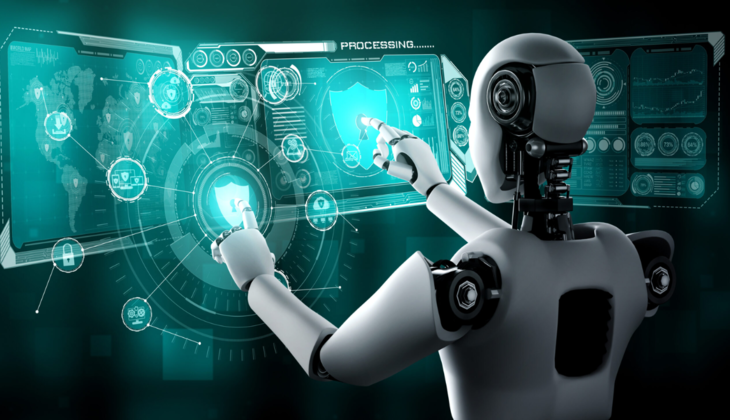
In 2025, artificial intelligence (AI) continues to evolve rapidly, but the most exciting transformations aren’t coming from the world of sci-fi. Instead, AI innovation is now grounded in practical applications that streamline business processes, improve productivity, and solve real problems.
The Role of AI in Enhancing Enterprise Productivity
At NTT’s Upgrade 2025 event in San Francisco, Naveen Rao, Vice President of AI at Databricks, shared his view on AI’s growing importance. According to him, AI is here to support humans, not replace them. "The real value of AI right now is in supporting humans—amplifying productivity and accuracy, especially in fields like software development," said Rao.
This AI-driven workflow improvement is where the future lies. In contrast to the buzz around artificial general intelligence, Rao emphasized that AI agents today are not autonomous minds; rather, they are tools designed to retrieve information and automate repetitive tasks. "AI agents are not sentient; they are intelligent retrieval systems," he said. The key to unlocking their power is specificity. “The sharper your query, the sharper the result,” he added.
AI’s Practical Use in Enterprise Systems
Sridhar Ramaswamy, CEO of Snowflake, agreed with Rao’s pragmatic approach. Instead of chasing visions of artificial general intelligence, Snowflake is focusing on AI tools that provide real business value today. Ramaswamy highlighted Snowflake’s commitment to building scalable systems that automate data migration and testing, using AI to handle key enterprise operations.
“We’re investing heavily in AI tools that automate everything from data migration to integration,” said Ramaswamy. He stressed that simplicity is key for these tools to be effective. "If users can’t start using it within a few hours, it won’t work."AI’s biggest impact in 2025 is in helping businesses manage their data more effectively. As data grows, AI tools are needed to understand and answer specific, internal business questions like, "What was our daily revenue?" or "How did our product line perform?" Ramaswamy explained that domain-specific AI tools are essential for analyzing quantitative and unstructured data within enterprises. These tools help companies get answers in real time.
While AI models and chips often grab the spotlight, Naveen Rao believes that the user interface (UI) is the true goldmine. "If AI agents are going to be useful, we need to reinvent how people interact with them," Rao said. Industries like law, finance, and logistics rely heavily on AI to provide context-sensitive information without slowing down workers. For example, on a noisy factory floor, workers need fast and relevant answers at the right time, without pulling out a laptop. AI agents, embedded seamlessly into workflows, could perform tasks in the background, offering high-impact solutions with little friction.
Despite these innovations, there are still challenges to overcome. AI hardware is catching up with the demands of AI-powered systems, and issues like inference costs and edge computing remain critical. Specialized chips will play a major role in determining which companies succeed in the next phase of AI development. Companies like NTT are already exploring photonics as an alternative to traditional data centers, which could significantly boost AI performance.
The future of AI in 2025 is about making intelligence practical—solving real problems at scale with precision. Companies that focus on practical AI solutions, rather than chasing unattainable sci-fi dreams, will be the ones to lead the charge in the coming years. AI tools that enhance productivity, improve workflows, and streamline enterprise tasks will be the cornerstone of this next chapter in the AI revolution.
