
Meet “Avataar”: India’s first drone that can fly in the sky and dive into the sea
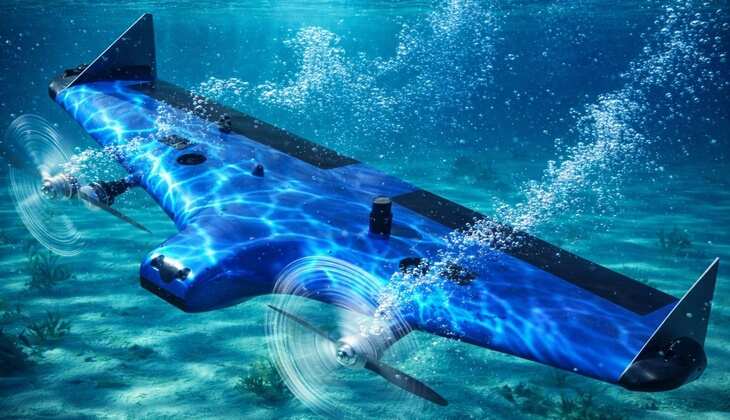
India’s drone technology has taken a big step forward with the launch of a new machine that can do something most drones cannot. A new system called Avataar drone can fly in the air like a normal drone and then dive underwater to continue its mission. This unusual ability makes it one of the first drones in the country designed to operate in both environments.
The drone has been developed by AquaAirX Autonomous Systems, a deep-tech startup based in Bengaluru. The company focuses on building autonomous machines that can work in difficult places such as oceans, rivers and coastal areas.
India Unveils First Amphibious Drone “Avataar”
— Netram Defence Review (@NetramDefence) March 7, 2026
India has marked a major leap in multi-domain robotics with the launch of “Avataar,” the country’s first amphibious drone, developed by Bengaluru-based AquaAirX Autonomous Systems.
The drone can operate both in the air and… pic.twitter.com/jN2p6PzjCc
A drone that works in air and water
Most drones can only fly in the sky. Once they touch water, their job is over. Avataar is different. It can take off like a quadcopter, fly to a location, land on the water and then dive below the surface to inspect or monitor underwater activity.
This means one machine can perform two types of work that normally require separate systems: an aerial drone and an underwater robot. Because of this, the drone can track an object from the air and then dive underwater to investigate it more closely. Experts say this “multi-domain” ability could be very useful for defence and research missions.
Built to survive harsh sea conditions
Operating underwater is not easy for electronic machines. Saltwater can quickly damage sensors and metal parts. To deal with this challenge, engineers built the drone with a carbon-fibre body that resists rust and corrosion. Special coatings have also been added to protect its electronics and sensors from salt deposits and marine debris. After each mission, the drone can be cleaned with fresh water to remove any remaining salt. These design choices allow the drone to move between air and water without damaging its systems.
Smart navigation underwater
Underwater navigation is very different from flying in the air. Cameras often struggle in dark or muddy water. To solve this problem, Avataar uses sound-based technology similar to how bats find their way in the dark.
The drone sends out sound pulses that bounce off objects and return to its sensors. By measuring these echoes, the system creates a three-dimensional map of the area around it. This helps operators inspect underwater structures such as pipelines, cables or ship hulls.
Possible uses for security and rescue
The drone has many potential uses. Defence agencies could use it to monitor ships near coastal areas. It can track a vessel from the air and then dive underwater to check its hull or search for threats. The system could also help in search-and-rescue operations after accidents at sea. In such situations, a drone that can move both above and below water can gather information much faster. Researchers say it can also be used for inspecting underwater infrastructure and studying marine environments.
A sign of India’s growing drone innovation
The launch of Avataar shows how fast India’s drone and robotics sector is evolving. Startups and engineers are now building machines that were once seen only in advanced research labs. By combining aerial flight and underwater exploration in one system, Avataar represents a new generation of smart robotic platforms. For now, it is still an emerging technology, but the idea behind it is clear: one drone, two worlds, sky and sea.