
E100 Fuel Could Leave Millions of Indian Vehicle Owners Facing an Insurance Grey Area Questions Over Engine Damage Coverage Grow as India Pushes Higher Ethanol Blends
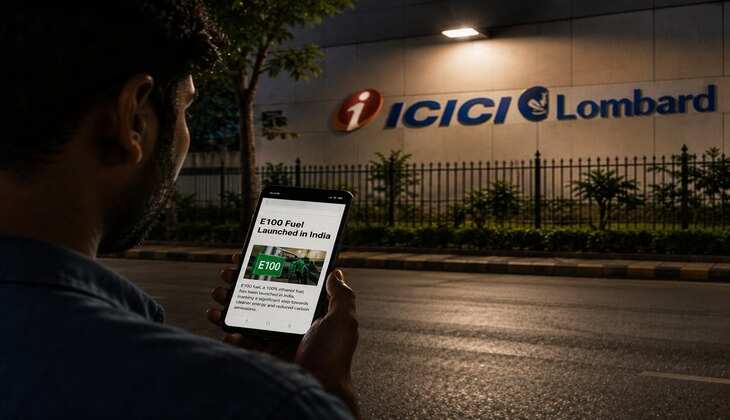
India's transition towards cleaner fuels could create a new challenge for vehicle owners if ethanol blends such as E100 become widely available. While the government sees higher ethanol blending as a way to reduce oil imports and emissions, experts say insurance and warranty policies may not yet be prepared for the shift.
The issue gained attention after ICICI Lombard initially published a blog suggesting that damage caused by using fuel not recommended by a vehicle manufacturer could be treated as negligence. The statement sparked widespread concern among motorists before the insurer issued a clarification.
ICICI Lombard Clarifies Position
ICICI Lombard has now stated that motor insurance claims are not rejected merely because a vehicle uses E20 fuel. According to the insurer, claim admissibility depends on whether the loss is caused by an insured event such as an accident or theft—not by the type of fuel used.
However, the clarification leaves an important question unanswered: What happens if an engine is actually damaged because it was run on an incompatible fuel?
Most standard motor insurance policies generally exclude mechanical breakdown, gradual wear and tear, or damage arising from improper use of a vehicle. That means engine failure linked directly to fuel compatibility may still fall outside normal insurance coverage, regardless of whether the fuel itself is legally available.
Why E100 Raises Bigger Concerns
Unlike E20, E100 is nearly pure ethanol and requires specially designed flex-fuel engines. Running E100 in a conventional petrol vehicle can damage fuel pumps, injectors, seals, hoses, and other engine components. If E100 is introduced more widely before India's vehicle fleet fully transitions to flex-fuel technology, millions of owners of older petrol vehicles could face expensive repair bills with little certainty over whether insurance would help.
Impact on Vehicle Owners
The biggest concern is not whether insurers reject claims simply because ethanol fuel was used—they have clarified they will not.
Instead, the concern is whether engine damage resulting from fuel incompatibility would be treated as an excluded mechanical failure rather than an insured loss.
This creates uncertainty for owners of older vehicles, particularly if higher ethanol blends become more common and conventional petrol becomes harder to find.
Need for Regulatory Clarity
Industry observers believe insurers, vehicle manufacturers and regulators should clearly define liability before higher ethanol blends such as E100 are rolled out on a larger scale.
Clear guidelines on insurance coverage, manufacturer warranties and fuel compatibility would help prevent disputes and give consumers confidence as India moves towards cleaner transport fuels.
Until then, vehicle owners are advised to use only the fuel recommended by their vehicle manufacturer and carefully review both warranty and insurance policy conditions before switching to higher ethanol blends.