
Supreme Court Allows Tree Cutting for Delhi Metro Phase-4, With Strict Environmental Conditions
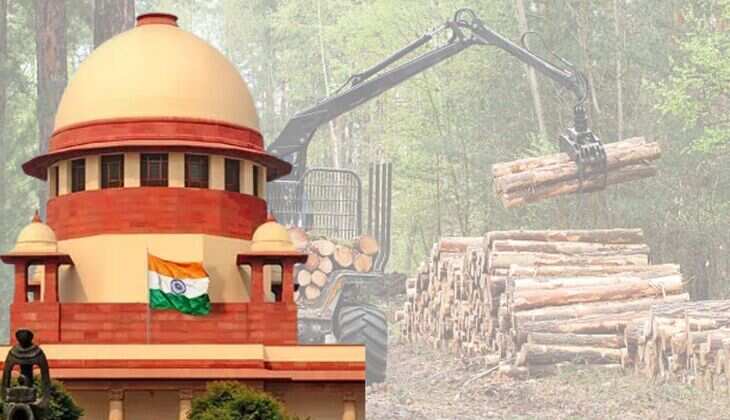
New Delhi, April 30, 2025 – In a significant boost to the Delhi Metro Phase-4 expansion, the Supreme Court of India has granted conditional approval to the Delhi Metro Rail Corporation (DMRC) for cutting trees along two key corridors—Inderlok to Indraprastha and Lajpat Nagar to Saket G Block. The green signal came after the court reviewed the Centre Empowered Committee (CEC) report, which laid down stringent environmental guidelines.
The court emphasized that the permission is not blanket, and DMRC must comply strictly with every condition laid out in the report. Solicitor General Tushar Mehta, appearing for DMRC, assured the court that every guideline would be followed to the letter, reflecting the organization’s stated commitment to sustainable urban development.
Elevated and Underground Corridors to Strengthen Delhi’s Transit System
The Lajpat Nagar–Saket G Block stretch will feature an 8.38-kilometre elevated corridor, aimed at easing congestion in South Delhi’s residential and commercial zones. Meanwhile, the 12.37-kilometre Inderlok–Indraprastha corridor will run largely underground, improving connectivity between central and northwest Delhi.
According to DMRC officials, both corridors are expected to be completed in approximately three years, boosting last-mile connectivity, reducing road traffic, and cutting down commute times for lakhs of daily travelers.
Supreme Court’s Conditions: Green Cover Must Be Restored
The court made it clear that tree cutting can only happen under strict environmental oversight. Conditions include:
-
Planting compensatory saplings for every tree felled
-
Regular environmental audits
-
Preservation of surrounding green zones
Any violation could attract legal and administrative consequences. The intent, according to the bench, is to strike a balance between infrastructure development and ecological preservation.
The CEC’s report also suggests forming a monitoring cell to oversee implementation, ensuring that construction and ecological safeguards progress simultaneously.
DMRC Reaffirms Its Green Commitment
Solicitor General Mehta emphasized in court that DMRC has a track record of complying with environmental rules and considers eco-sustainability a cornerstone of its operations. “From plantation drives to green rooftops at metro stations, DMRC has shown its environmental consciousness,” he said.
DMRC also committed to collaborating closely with the local forest department and municipal bodies to ensure all protocols are honored.
What’s at Stake: Connectivity, Pollution, and Urban Efficiency
Once completed, these metro corridors are expected to bring multiple benefits:
-
Reduce traffic congestion on Delhi roads
-
Lower vehicular emissions and contribute to cleaner air
-
Offer faster, safer, and more reliable transport options for lakhs of commuters
-
Strengthen the city’s sustainable urban mobility goals
Experts also believe that better public transport access will reduce urban stress, curb fuel wastage, and help in managing Delhi’s growing population pressure.
