
Toxic Foam in Yamuna Raises Alarm as BJP Slams AAP Over Delhi Pollution
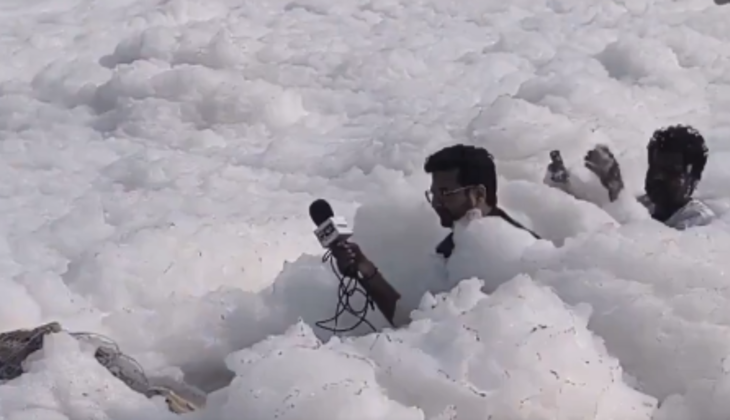
New Delhi — As air pollution continues to choke the national capital, another alarming sight has emerged: toxic foam floating on the Yamuna River in Delhi’s Kalindi Kunj area. The worsening pollution levels, coupled with this environmental hazard, have led to intense political debates, with the Bharatiya Janata Party (BJP) launching a sharp attack on the Aam Aadmi Party (AAP)-led Delhi government.
Pollution Crisis in Delhi
Delhi has been grappling with hazardous air quality in recent weeks, with the Air Quality Index (AQI) plummeting to concerning levels even before the Diwali festival. On October 16, Anand Vihar recorded an AQI of 433, falling under the "severe" category. Other areas such as India Gate and Dwarka have also seen AQI readings marked as "poor" and "very poor."
Adding to the capital’s woes, toxic foam was spotted on the Yamuna River, a recurring phenomenon caused by untreated sewage and industrial waste entering the river. The foam, which often appears before festivals like Chhath Puja, is a sign of severe pollution and has raised health concerns among residents.
వామ్మో.. ఢిల్లీలో భారీగా పెరుగుతున్న వాయు, నీటి కాలుష్యం
— Telugu Galaxy (@Telugu_Galaxy) October 18, 2024
కెమికల్స్ కారణంగా, యమునా నది నీటిలో భారీగా నురగలు#delhipollution #yamuna #Telangana #BRS #Congress #Congress #RevanthReddy #Musi #HYDRAA pic.twitter.com/SpV5mV4Wkg
BJP’s Attack on AAP Government
The BJP has wasted no time in criticizing the AAP government over the deteriorating air and water quality in the capital. BJP MP Manoj Tiwari expressed his frustration, accusing the Kejriwal-led government of being reactive rather than proactive in addressing pollution.
Tiwari stated, "The AAP government has had 10 years to address the pollution issue, yet they only act when a crisis hits. Both the air and the river are polluted, and it’s the people of Delhi who are suffering. Elections are coming up, and I urge the people to give BJP a chance to make Delhi livable again."
BJP spokesperson Shehzad Poonawalla also weighed in, calling Delhi a "poisonous gas chamber" and holding AAP responsible for its "politics of blame." He pointed out that despite promises to tackle stubble burning in Punjab, a major contributor to air pollution in Delhi, little action has been taken by the AAP government, which also governs Punjab.
Stubble Burning and Blame Game
Poonawalla further criticized the AAP for focusing on firecracker bans during Diwali, instead of addressing the root causes of pollution such as stubble burning. "Arvind Kejriwal banned firecrackers, targeting Hindus during Diwali, but what about stubble burning in Punjab? What happened to the bio-decomposer solutions he promised?" Poonawalla questioned.
Stubble burning, especially in neighboring states like Punjab and Haryana, has long been identified as a major contributor to the smog and poor air quality in Delhi during the winter months. However, despite government initiatives, the issue persists, leading to a yearly rise in pollution levels.
Current Air Quality Levels
As of Friday morning, AQI readings across various parts of Delhi painted a grim picture. Anand Vihar’s AQI stood at 339, placing it in the "very poor" category, while areas like Dwarka and Vivek Vihar saw AQI readings over 320. Even iconic locations like India Gate recorded "poor" air quality, with an AQI of 270.
The increasing levels of pollution and visible environmental degradation, such as the foam in the Yamuna, are raising alarm among both citizens and political parties. The situation is expected to worsen as winter approaches, bringing cooler temperatures and lower wind speeds, which trap pollutants closer to the ground.
The escalating pollution crisis in Delhi, from hazardous air quality to toxic foam in the Yamuna River, is a cause for serious concern. With political parties like BJP holding AAP accountable and citizens facing health risks, the demand for long-term, effective solutions is more urgent than ever. The question remains whether political will and proactive measures can tackle Delhi’s persistent pollution issues before they spiral further out of control.