
Beware of Fake Elon: AI Deepfake Tricks Viewers in Massive Crypto Scam | Read Here
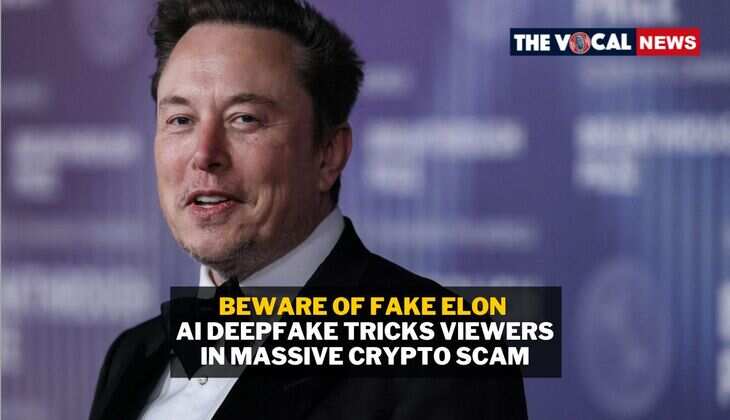
The rise of artificial intelligence (AI) has revolutionized many aspects of modern life, but it has also brought new risks, particularly in the realm of online scams. A recent and alarming example involves a deepfake video of Elon Musk that managed to deceive thousands of people into participating in a fake cryptocurrency scheme. This scam highlights the growing threat of AI-driven fraud, which is becoming increasingly sophisticated and difficult to detect.
The Deepfake Scam Unveiled
On August 25, a verified YouTube channel named "Tesla US" began streaming a live video titled “LIVE: Elon Musk Endorses Trump Ahead of Debate with Kamala Harris.” The video, which ran for over nine hours and attracted 26,000 viewers, featured what appeared to be Elon Musk discussing a cryptocurrency investment opportunity. However, the entire event was a fabrication, with AI-generated visuals and audio mimicking Musk to create a convincing deepfake.
The video included a QR code and a link to a website called teslaearn.io, which invited viewers to participate in an "investment scheme" promising shares of Bitcoin, Ethereum, Dogecoin, and Tether. The scammers even used Tesla’s official logo to lend an air of authenticity to their operation. Unfortunately, many people were fooled by the realistic presentation, leading them to invest in the fraudulent scheme.
The Mechanics of AI-Driven Scams
This incident is not an isolated case. AI-generated deepfakes have become a common tool for online scammers, with Elon Musk being one of the most frequently impersonated figures. According to a report by The New York Times, Musk is featured in nearly a quarter of all deepfake scams, particularly those targeting cryptocurrency investors.
The creation of these deepfakes is alarmingly simple and inexpensive. AI detection software company Sensity revealed that scammers, often based in regions like India, Russia, China, and Eastern Europe, can produce such videos for as little as $10 using a mix of free and affordable tools. These videos can be created in less than 10 minutes, making it easy for scammers to flood platforms like YouTube with fake content designed to lure unsuspecting victims.
The Broader Impact of AI Scams
The financial implications of AI-driven scams are staggering. Deloitte’s Center for Financial Services predicts that AI-related fraud losses in the United States alone could reach $40 billion by 2027, up from $12.3 billion in 2023. In India, cybersecurity firm CloudSEK reports that individuals lose over $50,000 each month to investment scams, with more than 29,000 fraudulent ads identified on Facebook alone.
The modus operandi of these scams is consistent: scammers entice victims with a seemingly lucrative investment opportunity, request small initial investments, and gradually demand larger sums as the victims become more invested. Once the victims realize they’ve been duped, often after exhausting their bank accounts, they seek help from law enforcement.
The Need for Vigilance and Education
While technology companies and law enforcement agencies work to combat these scams, the most effective defense remains public awareness and education. It’s crucial for individuals to learn how to identify deepfakes and recognize the red flags of fraudulent schemes. For example, if an investment opportunity seems too good to be true or if a well-known figure like Elon Musk is promoting it in an unofficial capacity, it’s wise to approach with skepticism.
Moreover, platforms like YouTube and social media networks need to enhance their detection and removal processes for such content. Although YouTube has taken steps to address this issue, as seen with the removal of similar scams in the past, the rapid advancement of AI technology means that these platforms must continually adapt to stay ahead of scammers.
The recent deepfake scam involving Elon Musk underscores the growing threat of AI-driven fraud in the digital age. As scammers become more sophisticated in their use of technology, it’s imperative that both individuals and institutions remain vigilant. By staying informed and cautious, people can protect themselves from falling victim to these increasingly convincing and damaging scams. While we may not be able to eliminate all scams, education and awareness are powerful tools in the fight against online fraud.
Also Read: Navigating the Crypto ETF Landscape: Spot vs. Futures | Explained
