
The Dark Side of Ambition: When Leadership Turns Toxic in the Tech Industry
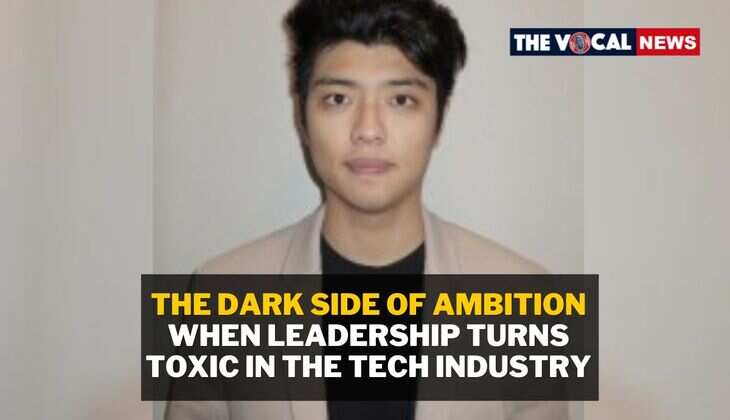
The tech industry, particularly the burgeoning field of cryptocurrency, is often celebrated for its innovation, disruption, and the boundless opportunities it offers to those who dare to think big. However, a recent incident involving a young software engineer intern and a prominent CEO has highlighted a less glamorous side of the industry—a side where ambition turns toxic, and the drive for success leads to the devaluation of people.
The Incident: A Lesson in Misplaced Ego
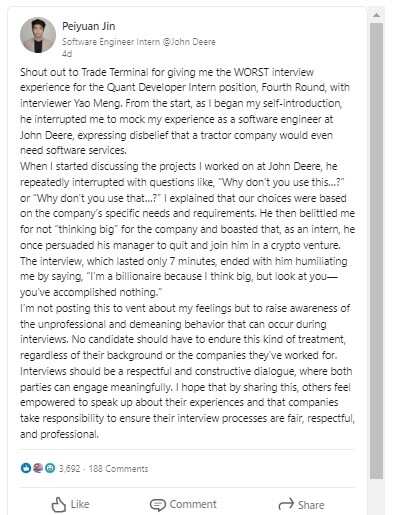
Peiyuan Jin, a software engineer intern based in the US, recently took to LinkedIn to share what he described as the "worst interview experience" of his career. Jin, who was interviewing for a Quant Developer Intern position at Trade Terminal, a cryptocurrency firm in California, found himself at the receiving end of what can only be described as a masterclass in toxic leadership.
During the final round of interviews, Jin was scheduled to speak with Yao Meng, the CEO of Trade Terminal. However, what should have been an opportunity to discuss his skills and experiences quickly turned into a nightmare. Meng, rather than engaging in a meaningful conversation, chose to belittle Jin’s background, mock his previous work experience, and dismiss his achievements with condescension.
According to Jin, the interview took a negative turn from the very start. Meng interrupted Jin’s self-introduction to ridicule his work at John Deere, a company known for its agricultural machinery. Meng expressed disbelief that a tractor company would even need software services, showcasing not only his ignorance but also a disturbing lack of respect for industries outside his immediate purview. As Jin attempted to discuss his projects, Meng continued to interrupt, questioning Jin’s ambitions and belittling his accomplishments.
The interview, which lasted a mere seven minutes, ended with Meng delivering a stinging comment: "I'm a billionaire because I think big, but look at you—you've accomplished nothing." This statement, intended to assert Meng’s superiority, instead revealed a deeply ingrained arrogance that many in the tech industry would find alarming.
The Cult of the “Big Thinker” and Its Pitfalls
The tech industry often idolizes the “big thinker”—the visionary leader who disrupts industries, takes risks, and achieves massive success. While there is no doubt that ambition and vision are crucial in driving innovation, the incident with Yao Meng highlights the dark side of this narrative. When the pursuit of success becomes all-consuming, it can lead to a toxic culture where people are valued not for their contributions but for how well they align with a narrow definition of success.
Meng’s behavior during the interview is a prime example of how the “big thinker” mentality can go wrong. By dismissing Jin’s experience at John Deere, Meng failed to recognize the potential value of diverse perspectives and underestimated the importance of industries outside the tech bubble. His focus on his own success and wealth blinded him to the contributions that someone like Jin could make to his company.
This kind of toxic leadership not only harms the individuals involved but also stifles innovation in the long run. When leaders dismiss or belittle those who do not fit their mold, they miss out on the creative potential that diversity brings. Innovation thrives on the convergence of different ideas, experiences, and perspectives. By shutting down voices that do not echo their own, leaders like Meng risk creating echo chambers that limit their company’s growth and adaptability.
The Impact on Talent Retention and Company Reputation
In today’s competitive job market, where skilled professionals have numerous options, the behavior of leaders can make or break a company’s ability to attract and retain talent. Jin’s experience, shared widely on LinkedIn, has sparked outrage and highlighted the importance of respectful and constructive leadership. Companies that tolerate or, worse, encourage toxic behaviors at the top are likely to suffer in the long term.
Employees, especially those early in their careers, are looking for environments where they can grow, learn, and contribute meaningfully. When leaders like Meng treat interviews as opportunities to flaunt their ego rather than assess potential, they not only damage their company’s reputation but also discourage talented individuals from joining their team.
In the comments on Jin’s LinkedIn post, many professionals echoed these sentiments, emphasizing that such behavior is a red flag that indicates deeper issues within the company’s culture. As one commenter noted, “Interviews should be a space for constructive dialogue and mutual respect, not a platform for tearing someone down.”
A Call for Humility in Leadership
The incident with Yao Meng and Peiyuan Jin serves as a stark reminder that true leadership is not about belittling others or flaunting personal success. It is about fostering an environment where people feel valued, respected, and empowered to contribute their best work. In the tech industry, where innovation is key, leaders must cultivate humility and recognize that great ideas can come from anywhere—even from those whose experiences differ from their own.
The tech industry has long prided itself on being forward-thinking and inclusive, yet incidents like this reveal that there is still much work to be done. Leaders must strive to build cultures where ambition is balanced with empathy, and where success is measured not just by financial gain but by the positive impact they have on their teams and the broader community.
As the crypto industry continues to grow and evolve, it is crucial that its leaders do the same. By embracing humility and fostering an inclusive culture, leaders can ensure that their companies remain at the forefront of innovation—and that they attract and retain the best talent in the process.
Also Read: The Reality of Mobile Crypto Mining: Is It Worth Your Time and Resources? | Read Here
