
India’s Exports Set to Surge to $750 Billion by 2024, Driven by Key Sectors - Read Here
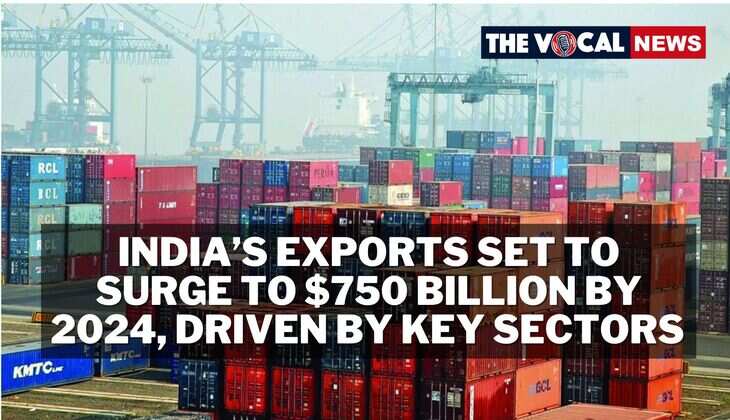
India is poised to reach an impressive milestone in its export landscape, with projections indicating that total exports will hit $750 billion by the end of 2024. This forecast, shared by the Ministry of Commerce, highlights the robust growth in sectors such as pharmaceuticals, textiles, and electronics. The significant uptick is not only a testament to India’s growing global trade presence but also a reflection of the country’s successful initiatives to modernize and diversify its export portfolio.
What’s Fueling India’s Export Boom?
India’s rise as a global trade powerhouse is driven by several factors. While pharmaceuticals, textiles, and electronics are leading the charge, there are deeper dynamics at play that are boosting export growth. The global supply chain disruption due to the pandemic has caused many countries to look for alternative sources, and India’s manufacturing sector is seizing the opportunity.
Moreover, government policies such as the Production-Linked Incentive (PLI) scheme have provided financial incentives to companies in key industries, making India a more attractive manufacturing hub. These initiatives are helping domestic firms scale up production, improve quality, and compete in international markets.
Let’s take a closer look at the sectors driving this export surge and how they are positioning India to achieve its ambitious $750 billion target.
Pharmaceuticals: Leading the Charge
India has long been recognized as the “pharmacy of the world,” and the pharmaceutical sector continues to play a pivotal role in the country’s export economy. In recent years, India has emerged as a leading exporter of generic medicines, vaccines, and active pharmaceutical ingredients (APIs), especially in the wake of the COVID-19 pandemic.
The government’s focus on expanding healthcare manufacturing capacity, improving research and development (R&D), and ensuring the quality of medical products has paid off. Indian pharmaceutical companies are also capitalizing on the growing demand for affordable, high-quality medicines in both developed and developing countries. With increased investments in innovation, India’s pharmaceutical exports are expected to rise even further, contributing significantly to the $750 billion export goal.
Textiles: Riding the Wave of Demand
Textiles have always been a cornerstone of India’s export economy, and the industry is witnessing a revival as global demand for Indian fabrics, garments, and home textiles surges. India’s rich tradition of textile production, combined with modern manufacturing capabilities, has enabled the country to cater to a diverse range of markets, from high-fashion to mass-market products.
One of the key drivers for growth in the textile sector is the increasing demand for sustainable and eco-friendly products. Indian textile manufacturers are embracing sustainable practices, such as organic cotton farming and energy-efficient production processes, making their products more appealing to environmentally conscious consumers. With strategic government initiatives and trade agreements in place, the textile sector is expected to play a significant role in India’s export growth story.
Electronics: India’s Tech Export Revolution
India’s electronics industry has emerged as a formidable player in the global market, thanks in part to the rapid digital transformation taking place both domestically and internationally. The demand for electronics, especially consumer devices such as smartphones, laptops, and other gadgets, has skyrocketed in recent years.
India’s push toward becoming a major electronics manufacturing hub has been boosted by government schemes like “Make in India” and the PLI initiative, which encourage both domestic and international companies to establish manufacturing facilities in the country. By offering financial incentives and easing regulatory processes, India is positioning itself as a competitive alternative to traditional manufacturing giants like China.
With the global semiconductor shortage prompting countries to seek new supply chains, India’s electronics exports are expected to see exponential growth in the coming years, adding to the overall export target of $750 billion.
Government Support and Strategic Policies
The government’s proactive role in fostering export growth cannot be overstated. Through a combination of financial incentives, trade facilitation, and infrastructure development, the Indian government is enabling businesses to access international markets more easily.
The PLI scheme, in particular, has been a game-changer for many industries, from pharmaceuticals to electronics. By incentivizing production at home, India is reducing its reliance on imports and boosting its export capabilities. Furthermore, India’s growing network of trade agreements with key global partners is opening new markets for Indian exporters, ensuring that demand for Indian goods remains strong.
The government’s focus on improving port infrastructure, reducing logistical bottlenecks, and enhancing supply chain efficiency is also contributing to faster, smoother trade operations. These measures are making India a more competitive player in the global trade arena.
Challenges and Opportunities Ahead
While the forecast of $750 billion in exports by the end of 2024 is certainly promising, there are challenges that India must navigate. Global economic uncertainties, protectionist policies from key trading partners, and ongoing supply chain disruptions could pose hurdles to achieving this ambitious target.
However, these challenges also present opportunities. For example, India can further strengthen its role as a reliable alternative to countries facing trade restrictions or supply chain disruptions. By continuing to diversify its export portfolio and enhancing the quality and competitiveness of its products, India is well-positioned to maintain its upward trajectory.
A New Era for Indian Exports
The Ministry of Commerce’s forecast of $750 billion in exports by 2024 underscores the strength of India’s economy and the effectiveness of its policies in driving trade growth. With key sectors like pharmaceuticals, textiles, and electronics leading the way, and strong government support behind them, India is set to achieve a significant milestone in its export journey.
This export boom is not just about numbers; it reflects a broader transformation of India’s role in the global economy. As the country continues to grow as a major manufacturing and export hub, the benefits will be felt across industries, regions, and communities, marking the beginning of a new era for Indian trade.
