
Narayana Murthy Criticises 5-Day Workweek, Says ‘I Don’t Believe In Work-Life Balance’
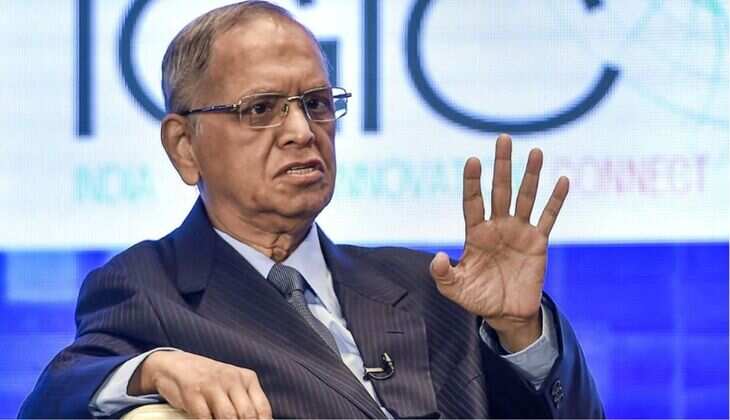
Infosys co-founder Narayana Murthy whose remarks against work-life balance are still one of the hottest debates; he reiterates that he does not believe in the concept of work-life balance. Speaking to CNBC Global Leadership Summit, Murthy reiterated that hard work had been an integral part of India's development journey and that the Indian workforce needed to shift its focus from dedication and putting in long hours towards becoming a global economic superpower.
Murthy's Stance on Work-Life Balance
During the summit, Murthy clarified that his stance with regard to work-life balance remains unchanged. "I do not believe in work-life balance," he said, and he remained resolute on this aspect, wherein he has often been surrounded by mixed reactions. Murthy, who has always preached the importance of a proper work ethic, elaborated that India, being an emerging economy, should focus on filling in the loopholes rather than getting myopic with work-life balance.
Nothing new though about Murthy's hard line. He had already proposed that Indians work for 70 hours a week to help the nation grow. The idea has been causing a furor, with some agreeing to have more strenuous work ethics while others decried it as too aggressive. But Murthy didn't budge, instead insisted that hard work is needed for national progress.
Hard Work as Key to National Progress
There is an emphasis, Murthy said, on the deep-set issues India faces, such as poverty, education, and infrastructure. The work-life balance concept need not overshadow the conversation. Bringing to the fore the work ethic of Prime Minister Narendra Modi, who is reckoned to deliver long hours, is an example he wants India to emulate.
"When PM Modi is working so hard, the only way to express our gratitude for the happenings around us is by working just as hard," Murthy said. He stated that if India didn't put effort into their work, then they couldn't compare with other countries. According to Murthy, there is no alternative to hard work. This feeling depicts his continued appeal to devote and sacrifice in order to make India a global goliath.
N. R. Narayana Murthy's Work Ethic: A Personal Example
Speaking in favor of the value of hard work that he has spent much of his career talking about, Murthy spoke from the inside out regarding his work ethic. According to him, in his entire career, he worked up to 14 hours a day six and a half days a week. On an average, his workday began at 6:30 a.m. and was extended till 8:40 p.m., depicting how he was seriously dedicated to professional duties. For Murthy, hard work is not a choice. It is a responsibility of the people who have been fortunate enough to get education and receive chances in life.
"I'm proud of it," he recalled how his grueling hours and tireless toil helped Infosys grow into one of the biggest IT companies in India and in the world. Murthy believes that those privileged enough to be educated and given opportunities should be the first to lead the way by example in their commitment to work.
Hard Work as a Duty to Nation Building
In similar terms, Murthy also mentioned the praises of respected business leader KV Kamath, who also recently expressed the same views when India needed more hard work to overcome its big problems. Kamath, Independent Director and Non-Executive Chairman of Jio Financial Services, always believes in the emphasis that if India can compete worldwide, it needs to focus all efforts on solving national issues.
The work culture of India needs to be oriented to value creation and contributing to the development of the country. Balance between work and life should not be the significant concern. Let him explain how Germany and Japan lifted their economies after the Second World War through hard work and persistency.
Work-Life Balance: The Debate and Its Challenges
Murthy believes that such remarks form part of a much wider conversation on work-life balance in India, especially with the pandemic pushing many professionals to work from home, he added. A healthy and balanced lifestyle is what many argue for; however, such thinking may prevent India from realizing its best potential, Murthy opined.
Balancing this against his knowledge of the worthiness of rest and personal time, Murthy has vigorously held that India is a developing country, and that growth and national progress—ideals requiring a hard-working and fervent worker base—are more critical for its focus.
The Millennial Dilemma: A 70-Hour Workweek?
Among his most controversial stands, Murthy has also said that the 70-hour workweek for millennials in India can be a productivity enchancer. Critics have often argued that such a work schedule leads to burnout, and the productivity level will be compromised at large. However, Murthy clarifies the aim of this recommendation: it is to keep the younger generation motivated toward and owning their roles in the nation's development.
"For me, hard work is essential, even if you are the most intelligent person," he asserted. This statement reflects Murthy's belief that intelligence alone is not enough—dedication to hard work is what ultimately brings about success and contributes to the nation's prosperity.
