
Rupee Hits Record Low of 84.76 Amid Weak GDP and FII Outflows - Read Now
The Indian rupee hit a new record low of 84.76 against the US dollar, impacted by weak GDP growth and continued FII outflows. The RBI intervened to stabilize the currency, but the outlook remains negative with a strong US dollar and economic concerns.
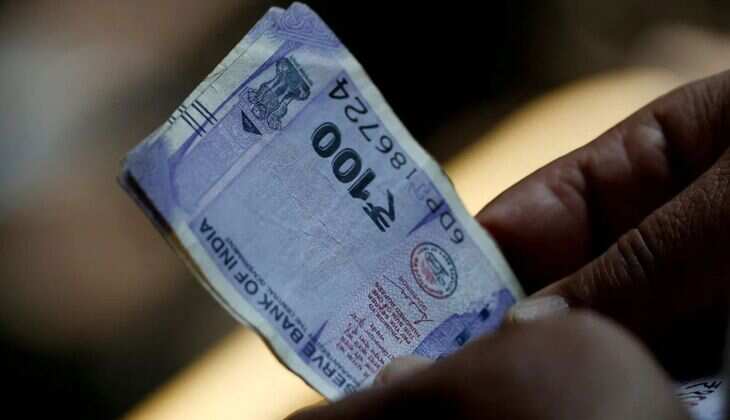
The Indian rupee has taken a significant hit, reaching a new record low of 84.76 against the US dollar on Tuesday. This marks the second consecutive day the currency has fallen to an all-time low, after closing at 84.73 on Monday. The rupee’s steep decline is fueled by a mixture of weak domestic economic indicators, persistent foreign institutional investor (FII) outflows, and the ongoing global strength of the US dollar, creating a storm of pressure on the Indian currency.
Sluggish GDP Growth Continues to Weigh on the Rupee
India’s economy has slowed dramatically, with GDP growth decelerating to just 5.4% in the July-September 2024 quarter—the weakest in seven quarters. This is a sharp decline from the 6.7% recorded in the previous quarter and 8.1% in the same quarter last year. As growth stagnates, concerns about India’s economic trajectory have increased, with some analysts speculating that the Reserve Bank of India (RBI) might need to ease monetary policy to stimulate economic activity.
This weak GDP data has made the rupee more vulnerable to external pressures, with investors growing increasingly wary about the future direction of the currency. As economic momentum falters, the rupee’s slide deepens.
The Role of FII Outflows in the Rupee’s Downward Spiral
In addition to domestic economic concerns, the rupee’s decline is being driven by massive foreign institutional investor (FII) outflows. In October and November 2024, FIIs sold off ₹1.16 lakh crore in Indian equities, leading to an increased demand for US dollars and further pushing down the rupee. With foreign investors pulling money out of India, the currency is left facing significant downward pressure, amplifying the effects of weak economic growth.
Global Dollar Strength: A Weight Around the Rupee’s Neck
Another key factor influencing the rupee’s decline is the continued strength of the US dollar. As the dollar continues to attract safe-haven demand in uncertain global markets, it has become increasingly difficult for emerging market currencies like the rupee to maintain their value. The situation is exacerbated by the fact that other Asian currencies, such as the Chinese yuan, have also hit lows against the dollar, reflecting broader regional weaknesses.
This global dominance of the US dollar is a powerful force, adding weight to the rupee’s already fragile position.
RBI’s Efforts to Stabilize the Rupee
In an attempt to reduce volatility and restore confidence, the Reserve Bank of India has intervened in the forex market, buying and selling currencies within a narrow range of 84.65 to 84.70. These interventions have helped manage short-term fluctuations, but the broader pressures on the rupee remain intact.
What’s Next for the Rupee?
Given the ongoing economic challenges and the global dominance of the US dollar, the rupee is expected to continue facing downward pressure in the short term. Analysts predict that the USD/INR exchange rate could trade within a range of 84.50 to 84.95, signaling that the rupee will likely remain volatile for the foreseeable future.
Investors should keep a close eye on India’s GDP performance, foreign capital flows, and any potential shifts in the RBI’s policy to gauge the future direction of the rupee. The road ahead remains uncertain, and the rupee’s path is likely to be shaped by a complex web of domestic and global factors.
Also Read: Wipro Shares Now Trade Ex-Bonus: Check Eligibility for the 1:1 Bonus Issue