
'Road Rage Turns Deadly’: Bengaluru Startup Founder’s Shocking Encounter Highlights India’s Safety Crisis
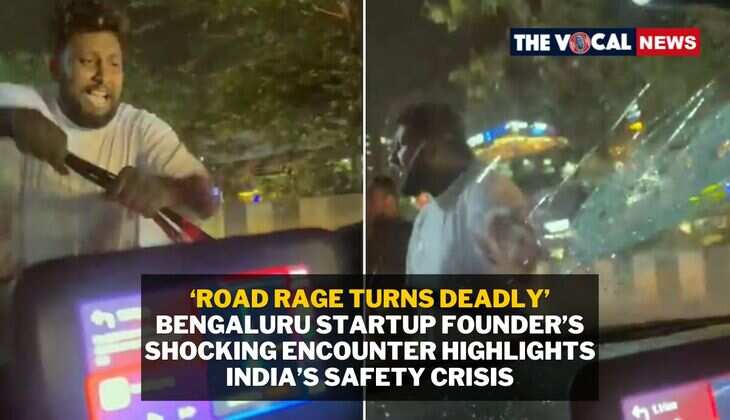
In the bustling city of Bengaluru, known as India’s tech hub, a recent incident has spotlighted a growing concern that extends far beyond the city’s traffic-choked roads. Dhruv Bhatia, the founder of a Bengaluru-based startup, LocalPanda, shared a harrowing experience that has not only shaken his personal sense of safety but also sparked a broader discussion about the societal challenges faced by modern India. His encounter with road rage, where he narrowly escaped a potentially fatal altercation, is a stark reminder of the underlying issues that plague urban life in India.
The Incident: More Than Just Road Rage
Bhatia’s ordeal began like any other day. As he walked near his apartment complex at Kudlu Gate in South Bengaluru, a water tanker nearly ran him over. Shocked and infuriated by the close call, Bhatia confronted the driver. What followed was an alarming escalation: the driver, instead of de-escalating, drove the tanker directly towards Bhatia, forcing him to leap out of harm’s way.
This incident could easily be dismissed as an isolated case of road rage, but Bhatia’s reflections on the experience suggest a deeper, more troubling reality. “India is not a safe country at all,” he lamented, pointing out that the casual disregard for human life is not just an aberration but a symptom of a much larger issue. The fact that a minor altercation could so quickly escalate into a potentially deadly confrontation speaks volumes about the state of civility and the value placed on human life in urban India.
I almost got killed (on purpose in cold blood) in Bangalore today
— Dhruv Bhatia (@north_star_says) August 21, 2024
I didn't want to post this, but since this is the first time something like this happened to me, I thought it's my moral responsibility to post it
(Continued below)
Urban Stress and the Erosion of Empathy
Road rage incidents like the one Bhatia experienced are becoming increasingly common in India’s sprawling cities. The root causes, however, are complex and multifaceted. Urban environments, characterized by overcrowding, traffic congestion, pollution, and a general sense of chaos, create high levels of stress for residents. This stress, combined with inadequate infrastructure and law enforcement, often manifests in aggressive behaviors on the road.
In cities like Bengaluru, where the infrastructure struggles to keep pace with rapid urbanization, frustrations boil over easily. The daily grind of navigating through traffic jams, dealing with reckless drivers, and coping with the noise and pollution can push even the most patient individuals to their limits. For many, the car or vehicle becomes a pressure cooker, and road rage is the steam that is let off when the pressure becomes too much to bear.
However, the issue goes beyond mere stress. Bhatia’s experience underscores a troubling erosion of empathy in urban life. The driver’s actions reflect a broader societal trend where individual frustrations are projected onto others with little regard for the consequences. The notion that human life can be so easily threatened over a minor dispute is indicative of a deeper moral and ethical decline.
The Role of Law Enforcement and Civic Responsibility
Bhatia’s experience also raises questions about the role of law enforcement in curbing such incidents. In many cases of road rage, the absence of immediate and effective police intervention exacerbates the problem. Drivers who engage in dangerous behavior on the road often do so with impunity, knowing that the likelihood of facing legal repercussions is low. This lack of accountability only emboldens those who are already inclined towards aggression.
Moreover, the incident highlights the need for greater civic responsibility among citizens. Bhatia noted that only one onlooker witnessed the incident, and the tanker driver was able to speed away without consequence. In a society where bystanders often choose not to intervene or report such incidents, the onus of ensuring safety falls disproportionately on individuals. This creates an environment where aggressors feel they can act without fear of reprisal, further eroding the social fabric.
A Call for Change: Addressing the Deeper Issues
Bhatia’s harrowing experience is a wake-up call that road rage is not just about aggressive driving—it’s a reflection of deeper societal issues that need to be addressed. To create safer urban environments, there must be a concerted effort to improve infrastructure, reduce stressors, and foster a culture of empathy and respect.
Law enforcement agencies need to take a more proactive stance in addressing road rage, with stricter penalties for offenders and more visible policing on the roads. Public awareness campaigns that promote road safety and responsible behavior could also play a crucial role in changing attitudes.
Furthermore, as Bhatia suggested, individuals must recognize the potential dangers of confrontation and prioritize their safety. However, this should not absolve society of its responsibility to protect its citizens. It is only through a collective effort that the cycle of aggression and disregard for life can be broken.
Moving Forward in Urban India
Bhatia’s near-miss with tragedy is a stark reminder that urban life in India is fraught with challenges that extend far beyond the traffic snarls and honking horns. It’s a call to action for city planners, law enforcement, and citizens alike to address the root causes of road rage and work towards building a more compassionate, empathetic society. As India continues to urbanize, the safety and well-being of its citizens must remain a top priority—on the roads and beyond.
