
New AI-Driven Healthcare Initiative Launched in Rural India: A Partnership for Better Access
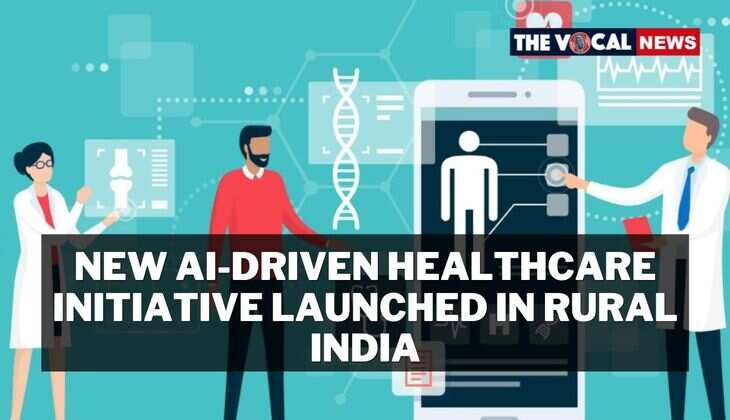
In a groundbreaking development, a leading Indian healthtech startup has partnered with the government to launch an ambitious AI-driven healthcare initiative aimed at revolutionizing healthcare services in rural areas. This collaboration represents a significant step towards addressing the persistent challenges of healthcare accessibility and quality in India’s vast rural regions. By leveraging advanced artificial intelligence technologies, the initiative aims to bring cutting-edge medical services to some of the country’s most underserved populations.
A Strategic Alliance: Transforming Rural Healthcare
The partnership between the healthtech startup and the government is a strategic alliance designed to tackle the long-standing issues of inadequate healthcare infrastructure, shortage of medical professionals, and limited access to quality care in rural India. Despite the rapid advancement of medical technologies and healthcare services in urban areas, a significant portion of India’s population remains without access to essential health services. This initiative seeks to bridge that gap by using AI to deliver healthcare solutions that are both scalable and sustainable.
The startup, known for its innovative use of technology to improve healthcare delivery, will play a crucial role in developing and deploying the AI systems that form the backbone of this initiative. These systems will be integrated into existing healthcare networks and facilities in rural areas, enabling them to offer a wide range of services—from diagnostics and treatment to monitoring and preventive care. By doing so, the initiative aims to provide rural populations with access to the same level of healthcare that is available in urban centers, thus reducing the disparity in health outcomes between different regions of the country.
A Unique Angle: AI as the Great Equalizer in Healthcare
One of the most compelling aspects of this initiative is its focus on AI as a tool for democratizing healthcare. Artificial intelligence has the potential to act as a great equalizer, making advanced medical services accessible to people regardless of their location or socioeconomic status. In rural areas, where there is often a shortage of trained medical professionals and limited access to healthcare facilities, AI can help fill the gap by providing accurate diagnostics, personalized treatment plans, and continuous monitoring of patients.
For instance, AI-powered diagnostic tools can analyze medical images and data with a high degree of accuracy, allowing for the early detection of conditions such as cancer, heart disease, and diabetes. In areas where specialist doctors are few and far between, these tools can provide critical support to general practitioners and community health workers, enabling them to make more informed decisions and deliver better care to their patients.
Moreover, AI can facilitate remote consultations, allowing patients in rural areas to connect with doctors and specialists in urban centers without the need for travel. This is particularly important in a country like India, where long distances and poor transportation infrastructure can be significant barriers to accessing healthcare. By bringing the doctor to the patient, rather than the other way around, AI has the potential to transform the healthcare landscape in rural India.
The Role of the Government: Scaling Up the Initiative
The government’s involvement in this initiative is key to its success. By partnering with the healthtech startup, the government can leverage its extensive reach and resources to ensure that the AI-driven healthcare services are implemented on a large scale and are accessible to all. The government’s role will include facilitating the integration of AI systems into public healthcare infrastructure, providing the necessary regulatory support, and ensuring that the initiative aligns with national healthcare goals.
In addition to these efforts, the government will also focus on building the capacity of local healthcare workers to use AI tools effectively. This will involve training programs and workshops aimed at equipping community health workers, nurses, and doctors with the skills they need to leverage AI in their daily work. By empowering these frontline healthcare providers, the initiative can ensure that the benefits of AI are felt at every level of the healthcare system.
The Broader Implications: A Model for the Future
The AI-driven rural healthcare initiative has the potential to serve as a model for other developing countries facing similar challenges in healthcare delivery. If successful, it could demonstrate how technology, when combined with strategic government partnerships, can overcome some of the most intractable problems in healthcare. The initiative could also pave the way for further innovations in AI and healthcare, leading to new solutions that address the unique needs of rural populations.
Moreover, this partnership between the healthtech startup and the government highlights the importance of public-private collaboration in addressing complex social issues. By bringing together the innovation and agility of the private sector with the scale and resources of the public sector, the initiative represents a powerful approach to tackling healthcare inequities.
The Impact on Rural India
As the AI-driven healthcare initiative rolls out across rural India, its impact will be closely monitored by stakeholders in the healthcare industry, government, and civil society. If successful, it could lead to significant improvements in health outcomes, particularly in areas such as maternal and child health, chronic disease management, and infectious disease control.
In conclusion, the partnership between the Indian healthtech startup and the government to launch an AI-driven rural healthcare initiative is a bold and visionary step towards improving healthcare access in underserved regions. By harnessing the power of AI, the initiative has the potential to bring high-quality healthcare to millions of people, bridging the gap between rural and urban healthcare services and setting a new standard for healthcare delivery in India.
