
OXCCU Startup Turns CO2 into Clean Jet Fuel: A Breakthrough for Sustainable Aviation - Read Now
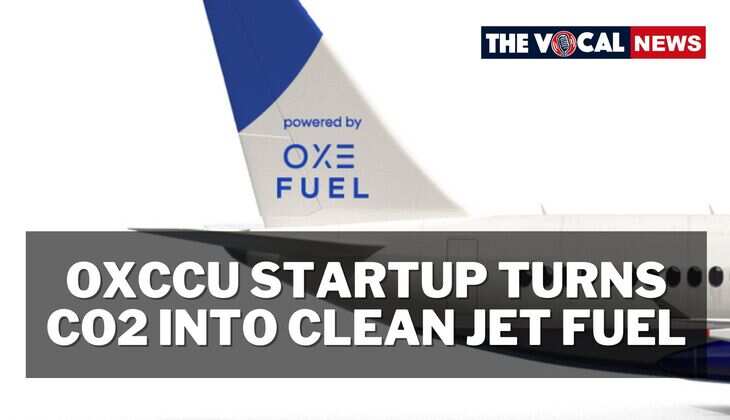
OXCCU, a groundbreaking startup in the carbon capture and green energy sector, has developed an innovative technology that transforms carbon dioxide (CO2) into clean jet fuel and biodegradable plastics. This breakthrough process has the potential to dramatically reduce carbon emissions in the aviation industry and other sectors, providing a more sustainable path for industries heavily reliant on fossil fuels.
With the world facing an unprecedented climate crisis, finding sustainable ways to reduce CO2 emissions is critical. Aviation, in particular, has been under scrutiny for its significant carbon footprint, contributing roughly 2.5% of global greenhouse gas emissions. The aviation industry’s reliance on fossil fuels has been a major hurdle in its efforts to reduce emissions. However, OXCCU’s technology offers a new, efficient solution that addresses both environmental concerns and industrial needs.
The Technology Behind OXCCU’s CO2-to-Jet Fuel Process
At the core of OXCCU’s innovation is an iron-based catalyst that converts captured CO2 into clean jet fuel, known as OXEFUEL. Traditional carbon capture processes usually involve complex, multi-step methods like the reverse water-gas shift and Fischer-Tropsch synthesis. These processes, while effective, often generate substantial waste and operate at lower efficiency. OXCCU’s catalyst simplifies this by combining these steps into a single-stage process, making the production more energy-efficient, less resource-intensive, and more cost-effective.
What makes OXCCU’s method stand out is its ability to produce jet fuel with fewer byproducts, reducing environmental waste and increasing fuel yields. In a time when decarbonizing industries like aviation is more important than ever, this innovative technology offers a viable alternative to conventional fuels without compromising on performance.
Potential Impact on Aviation and Beyond
The aviation industry is one of the hardest sectors to decarbonize due to its dependence on energy-dense fuels, which are difficult to replace with renewable alternatives like batteries or hydrogen. Electric planes are still far from commercial viability due to weight and range limitations. This is where OXCCU’s technology fills a crucial gap.
By converting CO2 into clean-burning jet fuel, OXCCU enables airlines to reduce their carbon footprint while still using existing aircraft and infrastructure. This “drop-in” solution doesn’t require major changes to airplanes or airport fueling systems, making it an attractive option for airlines looking to cut emissions quickly and affordably.
Additionally, the startup’s technology goes beyond aviation. OXCCU can also produce biodegradable plastics through the same process. These plastics degrade naturally into water and CO2 without emitting harmful byproducts like methane. This could revolutionize industries that rely on single-use plastics, reducing plastic waste and offering an environmentally friendly alternative to traditional petroleum-based plastics.
Scaling and Future Prospects
While OXCCU’s technology is still in the early stages of commercialization, it has already garnered significant interest from major players in the aviation and energy sectors. Several airlines have expressed interest in adopting OXEFUEL as part of their long-term sustainability strategies, especially in light of international efforts to reduce carbon emissions under agreements like the Carbon Offsetting and Reduction Scheme for International Aviation (CORSIA).
OXCCU is also exploring partnerships with major industrial manufacturers to deploy its biodegradable plastic technology at scale. The growing demand for sustainable materials across sectors like packaging, textiles, and medical equipment presents an enormous market opportunity for the startup.
A Shift Toward a Greener Future
The development of OXCCU’s CO2-to-jet fuel process is a testament to the innovation happening in the climate tech space. By turning CO2 from a harmful pollutant into a valuable resource, OXCCU is not only reducing the carbon footprint of high-emission industries but also creating economic value in the process.
As the global community moves toward more ambitious climate goals, innovations like OXCCU’s offer a glimpse into a future where even the most challenging sectors can operate sustainably. By providing practical, scalable solutions, OXCCU is helping to shift industries like aviation, manufacturing, and packaging toward a greener and more sustainable future.
OXCCU’s development of clean jet fuel and biodegradable plastics from CO2 represents a significant leap forward in the fight against climate change. With its efficient, single-step process and potential applications across various industries, the startup is well-positioned to become a leader in carbon capture technology. As it continues to scale, OXCCU may prove to be a critical player in decarbonizing sectors that have long struggled with reducing their environmental impact.
