
IIT Delhi Leads India's Charge in QS Asia Rankings 2025: Six Universities in Top 100!
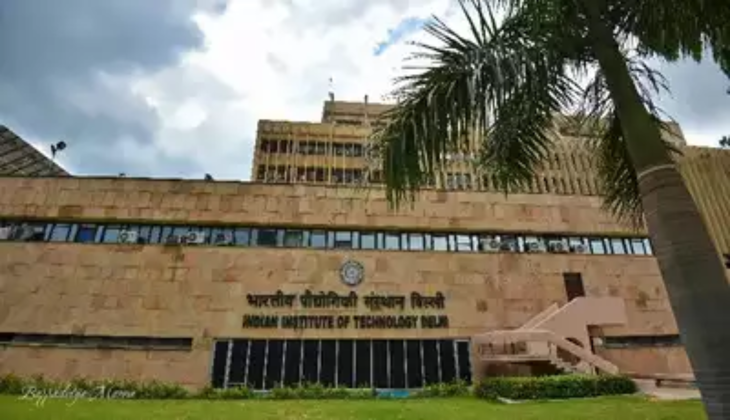
Indian Institute of Technology Delhi (IIT Delhi) has been placed at the top slot in India at the 44th position in Asia in the QS World University Rankings for Asia 2025. Quacquarelli Symonds, or QS has ranked 984 universities across the continent and there is a significant presence of 6 Indian universities in the top 100 list. In the Southern Asian category, which consists of India and Pakistan, among 308 universities considered, IIT Delhi emerged as the best institution in that category indicating a solid position for India within the regional education landscape.
Top Indian Universities in the Asia 2025 Rankings
All in all, 22 Indian universities have been included in the 2025 QS Asia Rankings, of which six universities have successfully achieved a position within the top 100 list. At the higher end of the list are IIT Delhi, IIT Bombay, and IIT Madras. Below is the list of Indian rankings in the QS Asia Rankings:
Indian Institute of Technology Delhi (IITD) Rank-44
Indian Institute of Technology Bombay (IITB) Rank-48
Indian Institute of Technology Madras (IITM): Rank 56
Indian Institute of Technology Kharagpur (IIT-KGP): Rank 60
Indian Institute of Science (IISc): Rank 62
Indian Institute of Technology Kanpur (IITK): Rank 67
This achievement for IIT Delhi, IIT Bombay, and IIT Madras alone points towards increasing significance of higher education in India in Asia. Second, IIT Kanpur's shared rank with Pakistan's National University of Sciences & Technology (NUST) Islamabad, at 6th rank in the Southern Asian sub-region, further represents a competitive academic circle within the region.
Ranking Evaluation Criteria
QS World University Rankings uses stringent criteria for determining the standard as well as impact of learning institutions. This year's rankings had these key factors:
International Faculty and Students: Diversity and globalization in academic and student populations
Staff with PhD: Measures the percentage of qualified staff as well as faculty
Faculty-to-Student Ratio: Involves personal attention and allocation of resources per student.
Academic and Employer Reputation: measures the perceived quality of the university and graduates' employability
Research Impact: usually quantified by citations per paper and papers per faculty-that is how good quality and quantity research are conducted
International Research Network: the scale of co-operation among different foreign universities
Inbound and Outbound Student Exchange: proxy for internationalisation and the institution's role in global academic mobility
Indian Institutions in Asia: on the rise, in influence.
India features strongly in the Asian top universities list, showing steady increases in quality and influence in this higher education sector. In shining a light on the country's progress towards academic excellence, research output, and institutional reputation at an international level, QS rankings are a welcome source of news to the management of IIT Delhi. The Indian institutions continue marching ahead, IIT Delhi retains the first position in exploring research capabilities and attracting the right global talent.
Southern Asia Highlights
Under the category of Southern Asia, India stands at a position wherein seven out of ten places have been taken, which is a testament to its leading status within this sub-continent. This success seems to be in line with the improvement embarked upon by the Indian government in the infrastructure of higher education, research grants, and policies catering to the spirit of international cooperation.
Future of Indian Universities Globally
Well, the performances of IIT Delhi and its counterparts place India on a good trajectory for the future rankings in the global economy. The strong research-based approach of involving faculty expertise, combined with the productive partnership from the industrial world, will enhance their ranking influence.
Their continued thrust on international partnerships, enhanced research production, and focus on exchange programs across students will heighten their position globally.
The QS Asia rankings for 2025 underscore the rising stature of Indian institutions in the world education scenario. Placement at the top by IIT Delhi, for one, confirms maximum representation by India at Asian level that endorses acumen to its academic strength and commitment to excellence. Such growth and improvements are likely to push the country's universities more towards upward trends while keeping the visibility and influence of India at a high point on the world education map. These developments, therefore, celebrate just as much as signify a bright new future for Indian higher education in the global academic world for the QS Rankings 2025.