
Kandahar Hijack: Former RAW Chief Dulat Reveals Farooq Abdullah's Role in Releasing Terrorists
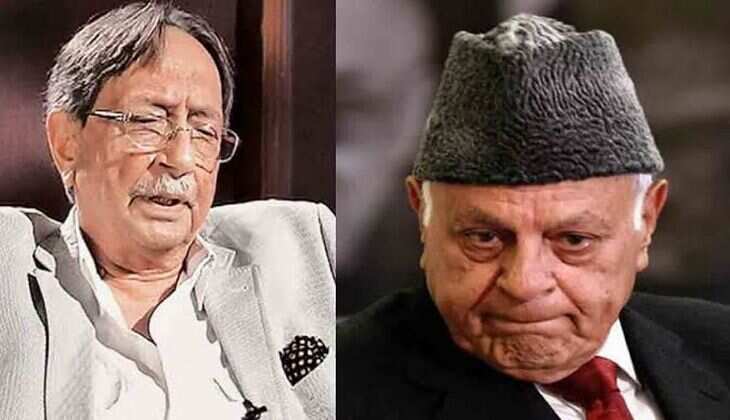
The 1999 Kandahar hijacking case has resurfaced in public discussion following the release of Netflix's series IC-814, which is based on the infamous incident. During the crisis, three dangerous terrorists were released in exchange for the safe return of the passengers aboard the hijacked Indian Airlines flight. However, former Jammu and Kashmir Chief Minister Farooq Abdullah strongly opposed the release of the terrorists, as revealed by A.S. Dulat, former chief of the Research and Analysis Wing (RAW), and a key member of the crisis management team handling the situation.
Dulat’s Insight into the Crisis
In an interview with The Times of India, Dulat shared insights into the tense negotiations and the role of Abdullah during the crisis. On December 24, 1999, Pakistani terrorists hijacked the Indian Airlines flight IC-814, which was traveling from Kathmandu to New Delhi with 28 passengers onboard. The terrorists killed one passenger, Rupin Katyal, who was returning from his honeymoon in Nepal. The crisis ended with India agreeing to release three terrorists—Masood Azhar, Mushtaq Zargar, and Omar Sheikh—in exchange for the safe release of the hostages.
Abdullah's Reluctance
At that time, Farooq Abdullah, the Chief Minister of Jammu and Kashmir, was staunchly against releasing the terrorists, who were imprisoned in Srinagar. According to Dulat, persuading Abdullah was a major challenge. "It was very difficult to convince Farooq Abdullah. He told me, 'You will pay a heavy price for this.' He was particularly resistant to releasing Zargar, but in the end, we managed to get his consent," Dulat recalled.
This was not the first time Abdullah had taken such a stand. In 1989, during the Rubaiya Sayeed kidnapping, he had similarly opposed releasing terrorists, though they were ultimately freed.
Reflecting on the Decision
When asked if the decision to release the terrorists weighed on his conscience, Dulat defended the actions taken at the time, stating, "Given the circumstances, we did what was the best possible option. If such an incident were to occur today, the Indian government's response would likely be very different. The players and the environment have changed. Prime Minister Modi is not Prime Minister Vajpayee, and it would be choreographed differently."
Dulat downplayed the controversy surrounding the IC-814 series, which has been criticized for portraying Pakistani terrorists in a softer light, calling the uproar unnecessary.
The Kandahar hijacking remains one of India's most painful episodes in modern history, with the decision to release terrorists still haunting many, including those directly involved in the negotiations.