
Prostitute Turned Down Role, Dadasaheb Phalke Cast a Boy as Queen: The Untold Story of Indian Cinema’s Founder!
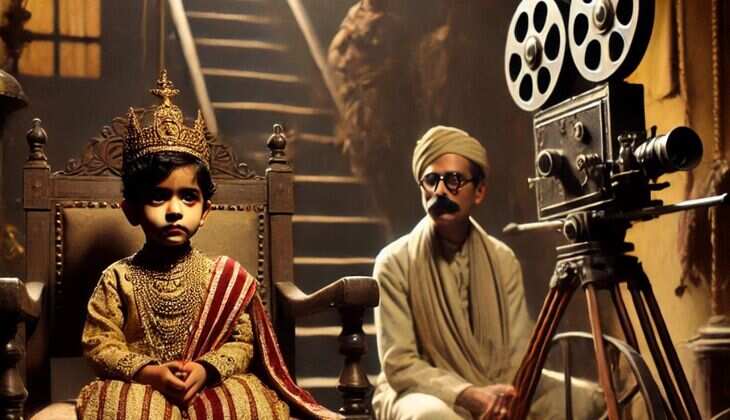
Dadasaheb Phalke, often referred to as the "Father of Indian Cinema," played a pivotal role in shaping the Indian film industry. His incredible journey, from a photographer to the creator of India’s first full-length feature film, is not only inspiring but also a tale of perseverance, creativity, and dedication. As we celebrate Bollywood actor Mithun Chakraborty being honored with the prestigious Dadasaheb Phalke Award, it’s worth revisiting the life and struggles of the man after whom this significant award is named.
The Early Life of Dadasaheb Phalke
Born as Dhundiraj Govind Phalke on April 30, 1870, near the holy town of Trimbakeshwar, Nashik, Phalke belonged to a Marathi Brahmin family. His father, Govind Sadashiv Phalke, was a renowned Sanskrit scholar and a priest at the local temple, instilling in him a deep love for culture and tradition.
From a young age, Phalke showed a keen interest in the arts. He enrolled in the prestigious J.J. School of Arts in Mumbai at the age of 15, where he studied painting and photography. Later, he pursued further studies at the Kalabhavan of Maharaja Sayajirao University in Vadodara, learning architecture and photography. These skills would lay the foundation for his future work in filmmaking.
Inspired by Cinema: The Turning Point
Phalke’s love for cinema was sparked after watching The Life of Christ, a film that left a lasting impact on him. This moment led him to a life-changing decision: he wanted to make films in India. However, filmmaking in India at that time was an unexplored field, and the necessary equipment and expertise were only available abroad.
Determined to pursue his dream, Phalke traveled to England to learn the art of filmmaking. After acquiring the necessary knowledge and equipment, he returned to India, ready to embark on a journey that would change the face of Indian cinema.
The Struggles Behind Raja Harishchandra
In 1913, Phalke began working on his first film, Raja Harishchandra, which would become India’s first full-length feature film. The journey, however, was far from easy. Financing the film was a major hurdle, and Phalke had to go to extreme lengths, including pawning his wife Saraswati Bai’s jewelry to raise funds for the production.
Casting also proved difficult. Finding a woman to play the role of Queen Taramati, Raja Harishchandra's wife, was particularly challenging, as acting was not considered respectable for women at the time. After failing to convince women from even the Red Light district to take up the role, Phalke eventually cast a young man named Salunke, a hotel worker, to play the queen.
After six months of hard work and a budget of 15,000 rupees, Raja Harishchandra was completed and premiered in 1913. The film became a landmark moment in Indian cinema, marking the birth of the Indian film industry.
Dadasaheb Phalke’s Impact on Indian Cinema
Following the success of Raja Harishchandra, Phalke continued to make films, producing successful works like Kaliya Mardan and Lanka Dahan. His contributions laid the foundation for the Indian film industry, and he is credited with producing 95 feature films and 27 short films over his 19-year career.
Phalke’s films were silent, as the technology for sound had not yet been introduced. However, with the arrival of talkies like Alam Ara in 1931, the dynamics of cinema changed. Phalke found it difficult to adapt to this new technology, and his influence began to wane. His final film, Setubandhan, marked the end of his filmmaking journey.
A Legacy that Lives On
Dadasaheb Phalke passed away on February 16, 1944, but his legacy continues to live on. In 1969, the Indian government instituted the Dadasaheb Phalke Award, the highest honor in Indian cinema, to recognize outstanding contributions to the field. The first recipient of this award was actress Devika Rani.
As we honor Mithun Chakraborty with this prestigious award, it is important to remember the man who laid the foundation for Indian cinema. Phalke’s perseverance, innovation, and passion paved the way for the flourishing film industry we know today, earning him the title of the “Father of Indian Cinema.”
Conclusion: The Enduring Influence of Dadasaheb Phalke
Dadasaheb Phalke’s life is a testament to the power of vision and determination. From pawning his wife’s jewelry to casting a male actor as a female lead, Phalke’s journey was filled with struggles, yet he never gave up on his dream. His story continues to inspire filmmakers and artists, making him a timeless figure in the history of Indian cinema.
As we celebrate the success and growth of Bollywood, it is crucial to acknowledge the contributions of Dadasaheb Phalke, whose efforts laid the groundwork for generations of filmmakers and artists to follow.