
Analysis: Understanding Assam's Crackdown on Infiltrators As 28 Declared Non-Indians
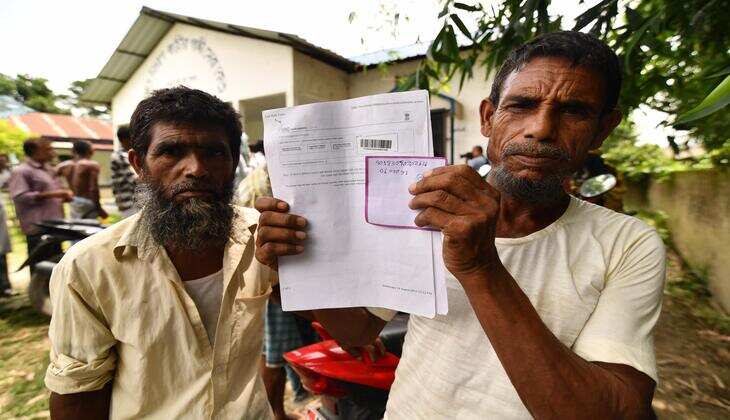
In Assam's Barpeta district, the Foreigner Tribunal has declared 28 individuals as non-Indians after thorough investigations. Following this declaration, the government promptly directed their transfer to the Goalpara Transit Camp. As the bus carrying these infiltrators set off, a new wave of tension emerged in Assam, marked by a declaration of resistance from certain factions.
The person you heard threatening to wage a "war" is Ashiq Rabbani, the President of the Muslim Student Union of Assam. Rabbani's statement points to the presence of elements within India who are sympathetic towards infiltrators and even advocate for their cause.
The issue of infiltration in Assam is a significant and sensitive topic. While some claim that all Muslims in Assam are Indian citizens and allege that the community is being unjustly targeted, the reality is more complex. Assam’s Chief Minister Himanta Biswa Sarma has initiated a stringent crackdown on illegal infiltrators, which has caused discomfort among certain groups. These groups seem troubled by the government's actions, but a closer look at the statistics reveals why this crackdown is crucial.
#Assam- 28 लोगों को डिटेंशन कैंप भेजे जाने पर भड़के मुस्लिम संगठन, बोले- हमें टारगेट कर रही सरकार
— Hindi States (@HindiStates) September 4, 2024
असम मुस्लिम स्टूडेंट्स यूनियन के चीफ आशिक रब्बानी ने कहा कि 28 लोगों को फॉरेन ट्रिब्यूनल के जरिए डिटेंशन कैंप में रखा गया है, जो पूरी तरह से गलत है. मुस्लिम संगठन के नेताओं ने कहा… pic.twitter.com/etgzvNiy6d
In 2019, a list prepared under the directives of the Supreme Court for the National Register of Citizens (NRC) indicated that there are 1.9 million illegal foreign nationals residing in Assam. This staggering number poses a severe threat to the security and social fabric of Assam and India as a whole. Despite this, there are voices that support these infiltrators, sympathizing with their plight. But why is this so?
The questions that arise are crucial:
Is the support for Bangladeshi and Rohingya infiltrators motivated by political agendas, particularly the creation of a vote bank?
Is there a communal angle, where support is extended because a significant portion of these infiltrators belongs to the Muslim community?
Or is there a strategic attempt to alter the demographic balance in Assam using these infiltrators?
Himanta Biswa Sarma has made a clear stand against Assam becoming a "Miya Land" (a term used derogatorily to refer to areas with a high population of illegal immigrants). His actions against infiltrators have drawn sharp criticism, with some opposition leaders even labeling him a dictator like Hitler. Such rhetoric is not uncommon in politics, but it is essential to understand the perspective of Assam’s indigenous people on this issue.
Infiltration and asylum are two very different concepts. Asylum is sought legally and is granted through a legitimate process, whereas infiltration happens clandestinely and cannot be justified. Supporting such illegal activities is not only wrong but also dangerous for the security and stability of the region.
The government’s current actions against infiltrators are not just about law enforcement but are crucial for maintaining the social and cultural integrity of Assam. As this situation unfolds, it becomes increasingly important to address these underlying issues and ensure that the rule of law prevails.
