
China’s New HQ-19 Defense System to Challenge US THAAD and Russia’s S-400: Impact on India - Read Now
China's HQ-19 defense system, rivaling the US THAAD and Russia's S-400, raises security concerns for India and the US. With interception capabilities against ballistic missiles, HQ-19 is a new factor in global defense dynamics.
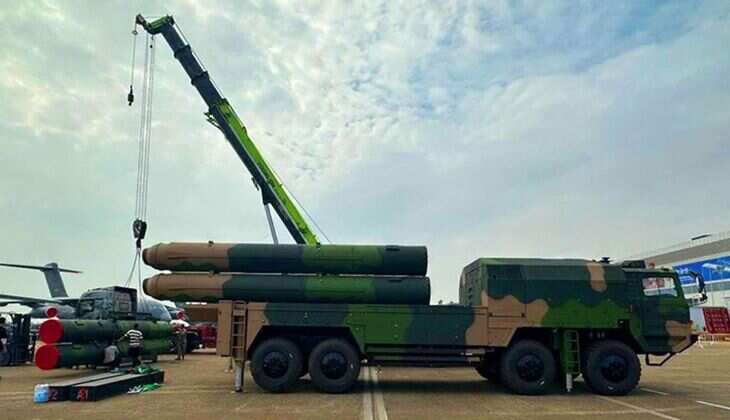
China's new military innovation, HQ-19 air defense system, appears to be making waves in the global security circle. Revealed at the 15th Zhuhai Aerospace Show on November 12, 2024, this is the new advanced defence system into the market to be panned and compared with THAAD of the United States and S-400 from Russia, categorized as among the world's most potent missile interception systems. The Global Times, a Chinese state media outlet, reports that HQ-19 might put it at the "center of missile warheads interception," which can raise concerns for both India and the US.
Highly advanced interception capabilities – HQ-19Innovative "hit-to-kill" technology taken directly from the US THAAD approach to missile defense. It identifies and intercepts its target ballistic missiles mid-air, potentially neutralizing multi-level attacks. If it is effective in real-world scenarios, HQ-19 could prove highly valuable in wartime situations, fundamentally shifting the balance of defense power.
Current key features of the HQ-19 are
Multi-Level Attack Interception: This multi-level attack capability of the HQ-19 gives it yet another flexibility making it a highly effective defence against complex, multi-pronged military engagements.
Hit-to-Kill Technology: This technology, like THAAD, enables targeted missile elimination by enemy missiles before hitting their target, a functionality that could pose dire implications within a high-stakes conflict.
Ballistic Missile Defense: HQ-19 can attack ballistic missiles at intermediate trajectory, so it is another added robustness as an integrated air defense system.
Although HQ-19 has much potential, yet it remains an unread letter. Defense analysts in India, among others, are watching the situation and wondering how the system might work if put under real wartime conditions.
Implications for India The induction of the HQ-19 comes in an era of heightened defense preparedness in India. A country that has spent much in defense, armed with missile systems such as BrahMos and Agni-5 that are perceived to act as a deterrent to China's burgeoning military power. But the HQ-19 may prove to be game-changer for this balance-that's Indian defence analysts have to look into how to best respond to this new Chinese system.
China's Air Defense System HQ-19 Concerns for India:
Geopolitical Tension Issues: The HQ-19 is likely to escalate the security rivalry between the two neighbors, as New Delhi rushes to develop its missile interception systems as a deterrent.
Shift in Defence Strategy Paradigm: China's present overt advantage in defence technology forces India to reassess and strengthen its missile defense systems to counterbalance strategic parity.
With HQ-19, India has been significantly relying on its missile systems and alliance with countries for advanced technology in her defense approach. It will now mean that India needs to strengthen her defense alliances and maybe find a window of further collaboration with the US with such technologies of interception.
Global Security Implications and HQ-19Critical global security dynamics will go through a change with the emergence of HQ-19. The US THAAD system was designed to try and solve security problems in the Middle East, making the defense system of Israel stronger in the face of incoming missile threats. Likewise, the Russian S-400 has been a reliable missile defense for those countries that somehow needed this capability in their arsenal. However, China's emergence with the HQ-19 means a new contender in the defense field that may make countries rethink their missile defense capabilities.
Apart from India, the HQ-19 also becomes a challenge to other nations, so to speak with interests in Asia's security dynamics or those who have a stake in such issues; the US and its allies are good examples. The fruits of this advanced defense technology by China may galvanize the global defence players to bring a head start to their military technologies with potential connotations towards the wider geopolitical scenario.
