
From Oil to AI: How the G7 Summit Revealed India's Strategic Priorities
The 2026 G7 Summit underscored India's growing focus on energy security, maritime safety, and critical mineral supply chains, highlighting how New Delhi is positioning itself to benefit from shifting global economic and geopolitical priorities.
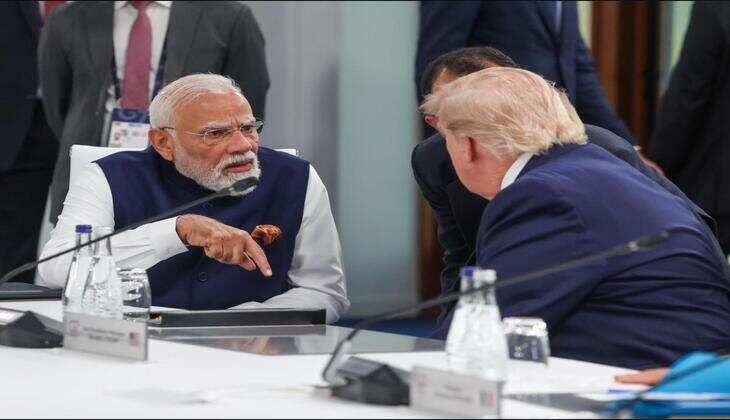
The 2026 G7 Summit highlighted three issues that are increasingly shaping global politics: energy security, maritime safety, and access to critical minerals. While world leaders discussed a wide range of topics, these concerns emerged as particularly important for India as Prime Minister Narendra Modi engaged with leaders including U.S. President Donald Trump.
Energy Security Takes Center Stage
The ongoing conflict in West Asia has raised fears of disruptions to global oil supplies, particularly through the Strait of Hormuz, one of the world's most important shipping routes. For India, which relies heavily on imported crude oil, any escalation in the region could lead to higher fuel prices and economic pressure. As a result, securing stable energy supplies has become one of New Delhi's most urgent diplomatic priorities, making energy security a key focus of discussions at the summit.
Modi's Message on Seafarer Safety
Alongside concerns over energy, Modi used the G7 platform to call for the protection of seafarers and the security of global trade routes. His remarks came amid growing tensions in West Asia and after Indian sailors were affected by the conflict. Without directly naming any country, the Prime Minister emphasized that civilian crews and commercial shipping should not become victims of geopolitical disputes. The statement reflected India's concern for both its citizens working at sea and the uninterrupted flow of global trade.
The Global Race for Critical Minerals
Another major topic at the summit was the growing dependence of advanced economies on China for critical minerals such as lithium, rare earth elements, and graphite. These resources are essential for electric vehicles, artificial intelligence, semiconductors, renewable energy, and defense technologies. G7 nations are now looking to build alternative supply chains and reduce their reliance on China, turning critical minerals into one of the most important strategic resources of the modern era.
An Opportunity for India
The shifting global landscape could create significant opportunities for India. As countries seek reliable partners for manufacturing and supply chains, India is increasingly being viewed as a potential alternative destination for investment. From clean-energy technologies to advanced manufacturing and mineral processing, the changes being discussed at the G7 could strengthen India's position in the global economy. The summit ultimately demonstrated that the future will be shaped not only by military power, but also by who can secure energy, protect trade routes, and control the resources that power the technologies of tomorrow.