
India’s ₹200 Crore Livestock Census Kicks Off: Counting Cows, Goats, and Jobs Nationwide!
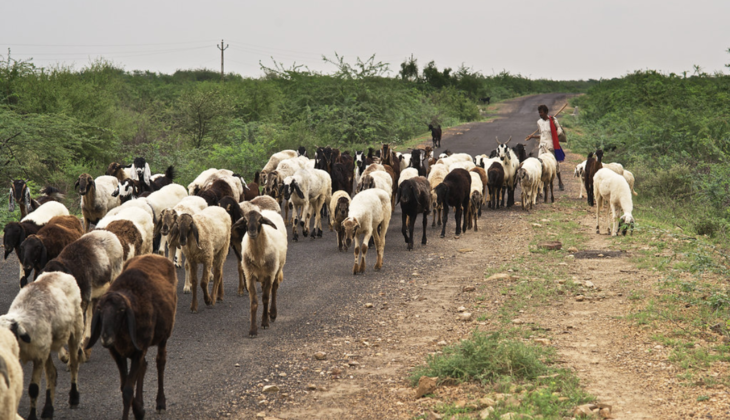
India has begun conducting its 21st livestock census, an enumeration which counts cattle, sheep, goats, and other species of livestock in the entire country. This is an initiative by the Union Minister, Rajeev Ranjan, through which it intends to establish a clear estimate of cattle numbers and their health, for which it is predicted to be ready in about five months from now by February 2025. The government is providing an adequate fund of ₹200 crore as support to the animal husbandry sector with a well-designed policy. Significantly, the this year's census is going to generate significant local employment, too. It is set to provide employment opportunities for nearly 100,000 people in the entire nation.
Livestock Census and Its Purpose
Much like India conducts the overall human census of the entire country to know population-related changes and to policy formulations, the livestock census conducted in the agriculture and the animal husbandry fields aims at the same goal and objective. The outcome would be that the government understands the distribution, health of the livestock population and thus its growth potentiality. This data will inform on how livestock contributes to the economy and pinpoint areas that need improved health and care interventions, especially in rural communities where livestock is vital for livelihood.
Budget Allocation and Pandemic Preparedness Fund
The government has sanctioned ₹200 crore solely for the census of livestock, which includes counting sheep, goats, cows, buffaloes, and other animal species. There is also the Pandemic Fund Project at 2.5 million USD (approximately ₹211 crore) to tackle the health crises in livestock. This fund will be spent on preventing and managing animal disease outbreaks, keeping India's livestock healthy and safe.
Livestock Census Benefits
Accurate Collection of Data: It will provide information on the number and health status of the livestock population in India. This information will help formulate health and management policies in a targeted manner.
Policy Formulation: It will help formulate specialized policies for the care and support of shepherds and other animal-dependent communities.
Sectoral Growth: It will allow focused support and growth in the animal husbandry and dairy sectors, which are important for the rural economy of India.
This encompasses the development of the livestock health situation as well as the Disease Prevention: the Pandemic Fund Project strengthens India's capability to prevent and respond to livestock health crises thereby saving animals as well as safeguarding rural populations' livelihood. What animals are included in the Census?
16 species and 219 local breeds of animals will comprise this entire census. The entire census of cows, buffaloes, sheep, goats, chickens, etc. is the commonly bred species. It will compute the various local breeds in this sector also, which it has identified genetic variation of animal husbandry of India. Statistics of the shepherd communities will be worked out also, which again forms an independent study on community-based policy for their convenience.
Job Creation: 100,000 New Positions
The most important direct positive effects of the census are in job creation. 100,000 new jobs are likely to be created. Most of them are at the field levels for veterinarians and para-veterinarians who will go out into the fields to collect data. In this process, it would offer employment, thus ensuring that people can achieve stable incomes in rural areas and, in turn, help build their economies.
Expected Outcomes and Future Implications
The government's livestock census can be a game changer for India's animal husbandry sector. Complete data will ensure that the policymaker makes decisions based on facts rather than assumptions-from improved health of livestock to proper rural support for those engaged in animal rearing. Improved disease management and strategic development policies will help the census positively contribute to both economic growth and rural resilience.
It is targeted to be completed by early 2025, during which the census will shortly be able to provide actionable insights into the most crucial sectors of India-one being animal husbandry.
Also read: Viral Oops Moment by Abhinav Arora: Missed Mythology Questions Cause Social Media Storm!