
India-Pakistan Conflict Risks Escalating to Nuclear War: U.S. Intel
A U.S. intelligence report has raised alarms about rising tensions between India and Pakistan, highlighting the real—though still low—risk of a nuclear conflict. India has suspended the Indus Waters Treaty, while both nations bolster their arsenals amid rising geopolitical instability.
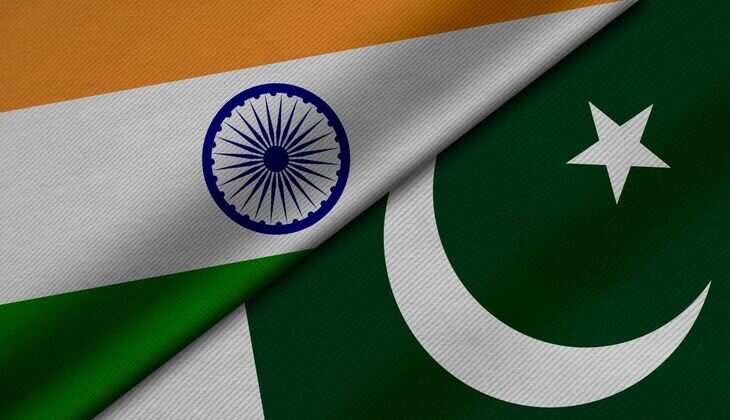
A just-declassified U.S. intelligence report has triggered worldwide alarm by citing the threat of irrational nuclear escalation between nuclear powers India and Pakistan. Although a full-scale nuclear war is still unlikely, danger is real—and increasing.
Tensions between the two nations have reached new heights after the Pahalgam terror attack, with India blaming Pakistan-backed forces for masterminding the massacre. In a major diplomatic step, India has unilaterally suspended the Indus Waters Treaty, sending Islamabad into further alarm.
Rhetoric & Missile Threats Add Fuel to Fire
The report mentioned Pakistan's army chief recently called Kashmir the nation's "jugular vein," a comment that was interpreted as a grave provocation. The high velocity of contemporary ballistic missiles also increases the danger of an abrupt, irreversible war. Pakistan's Shaheen missile can allegedly reach New Delhi in 7 minutes, and India's Pralay missile can hit Islamabad in less than 6 minutes.
Historical accounts have also cautioned against nuclear escalation: a 1981 U.S. National Intelligence Estimate stated that India could attack first if it feels threatened by a Pakistani nuclear capability. A 1989 follow-up report reaffirmed the danger of conventional war escalating into nuclear war.
Water as a Weapon: India Suspends Indus Treaty
India's suspension of the 1960 Indus Waters Treaty has seriously shaken Pakistan, where more than 90% of agriculture relies on the Indus River system. Pakistan retaliated by stating that any move to block or divert water would be considered an act of war and would be met with retaliation in both conventional and non-conventional forms.
Islamabad has dismissed India's action, saying the treaty cannot be unilaterally terminated and labeling water a national security issue.
Nuclear Arsenals: Who Possesses What?
There are 12,121 nuclear weapons in the world, according to the Stockholm International Peace Research Institute (SIPRI). Here's how they're allocated:
- Russia: 4,380 (1,710 deployed)
- USA: 3,708 (1,770 deployed)
- China: 500 (24 deployed)
- France: 290 (280 deployed)
- UK: 225 (120 deployed)
- India: 172 (none deployed)
- Pakistan: 170
- Israel: 90
- North Korea: 50
India recently upgraded its arsenal from 164 to 172 warheads, for the first time surpassing Pakistan.
Missile Capabilities: A Glimpse of Destruction
India's Arsenal:
- Short-range: Prithvi (350 km)
- Medium-range: Agni I (700 km), Agni II (2,000 km), Agni III (3,000 km)
- Long-range: Agni V (up to 7,500 km)
- Pakistan's Arsenal:
- Short-range: Nasr, Hatf, Ghaznavi, Abdali (60–320 km)
- Medium-range: Ghauri, Shaheen (900–2,700 km)
India's major cities of Delhi, Mumbai, and Lucknow are within Pakistan's reach, while Islamabad, Lahore, and Karachi are within India's range.
Also Read: Lashkar Commander Altaf Lali Killed in Bandipora Encounter
World Unrest Drives Arms Buildup
The world's growth in deployed nuclear weapons—increasing by 60 warheads over the past year—is due to the unremitting strife between Russia-Ukraine, Israel-Gaza, and China-Taiwan. SIPRI Director Dan Smith cautioned, "We are living in one of the most dangerous periods in recent history."
???? Diverging Nuclear Policies
India's policy is a "No First Use" one, i.e., it will use nuclear weapons only in retaliatory mode. Pakistan does not have a clear-cut nuclear doctrine, and therefore its use policy is extremely volatile.
