
Kanwar Yatra Eateries Row: SC Says No Need to Disclose Names, Show Only 'Veg or Non-Veg'
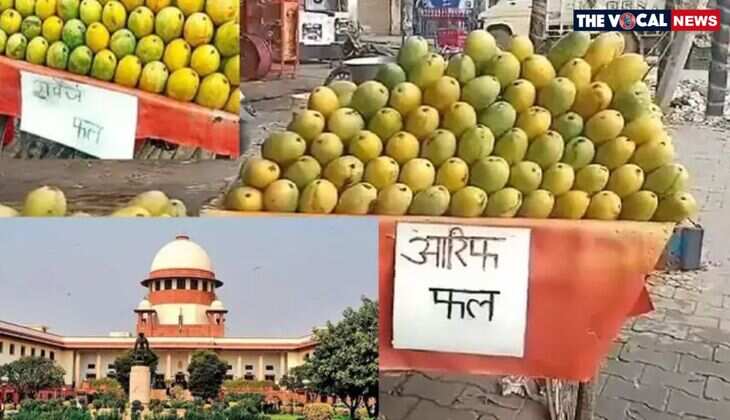
Lucknow: The Supreme Court of India has issued an interim order in response to a petition challenging the Uttar Pradesh government's directive requiring shop owners along the Kanwar Yatra route to display their names. The directive specifically targeted fruit vendors, flower sellers, hotels, and restaurants. According to the Supreme Court's order, shopkeepers are no longer required to disclose their identity. Instead, they only need to indicate whether their establishment serves vegetarian or non-vegetarian food. The next hearing on this matter is scheduled for July 26.
Major Setback for Yogi Adityanath Government
This order represents a significant setback for the Yogi Adityanath government. Additionally, a similar order issued in Uttarakhand has been halted as well. The directive by the Uttar Pradesh government was challenged in the Supreme Court by the NGO Association for Protection of Civil Rights. Justices Rishikesh Roy and SVN Bhatti presided over the hearing.
Observations and Comments
During the hearing, Justice Bhatti shared a personal anecdote, stating, "I have my own experience. In Kerala, there was a vegetarian hotel owned by a Hindu and another by a Muslim. I used to visit the Muslim-owned vegetarian hotel because the owner had returned from Dubai and followed international standards of cleanliness." This comment was considered significant in the context of the case.
Supreme Court's Query
The Supreme Court questioned whether the order was officially issued by the UP government or was merely a statement. CU Singh, representing the petitioners, argued that the administration was pressuring shopkeepers to display their names and mobile numbers. He asserted that no law grants the police the authority to enforce such a directive. The police are only empowered to verify the type of food being served, and the disclosure of the employee or owner's name cannot be mandated.
Interim Order and Notices
The Supreme Court clarified that the directive is voluntary and not mandatory. The petitioners highlighted that the Haridwar police had enforced the directive, warning that non-compliance would result in action. Similar actions were reportedly considered in Madhya Pradesh. The petitioners contended that this directive was akin to an economic death sentence for traders.
Notices to Three State Governments
In its interim order, the Supreme Court has stayed the implementation of the name plate directives in Uttar Pradesh, Uttarakhand, and Madhya Pradesh. Notices have been issued to the governments of all three states, requiring them to respond by Friday. The next hearing on the name plate controversy is scheduled for July 26, during which the Supreme Court may deliver a final verdict. Previously, the Court had emphasized that only the type of food being served needs to be indicated on shops along the Kanwar Yatra route, not the shop's name. Thus, the Supreme Court has temporarily halted the enforcement of the name plate directive by the government and administration.
