
Sadhguru on India at 79: From Liberalization to True Liberation
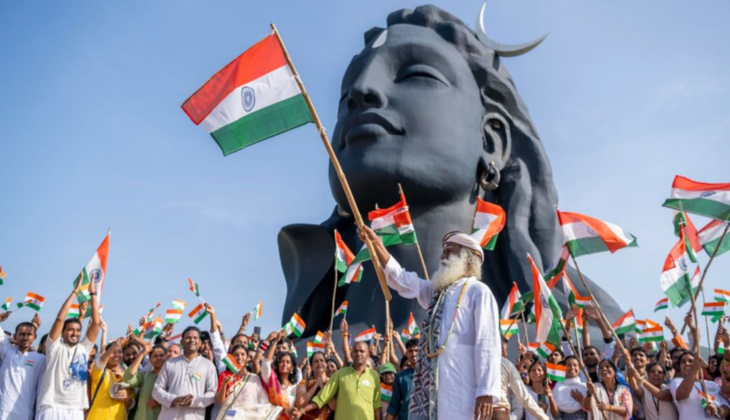
As India celebrates its seventy-ninth Independence Day, Sadhguru emphasizes that the concepts of freedom and sovereignty must be understood in their deepest sense. The nation faces multiple challenges—from global economic fluctuations and political isolation to domestic issues around faith, caste, regional identity, and the rising mental health concerns among youth. Yet, Sadhguru asserts, challenges are opportunities for growth, and a resilient leadership sees them as catalysts rather than setbacks.
Sadhguru calls for a transformation beyond mere liberalization—true liberation. India needs a surge of bold, confident, and adventurous free enterprise. Education, industry, technology, and infrastructure should be freed from excessive government control, enabling individual initiative and human ingenuity to thrive. Encouraging citizens to actively contribute to nation-building through roads, bridges, universities, and other public infrastructure will create a more dynamic and self-reliant India.
Acknowledging the minor disruptions that will accompany rapid progress, Sadhguru notes that archaic regulations, outdated taxation laws, and cumbersome bureaucracies must adapt to change. Radical innovation should never be stifled by red tape, as true freedom in enterprise drives national growth.
India’s strength in Information Technology and its rapid rise as a global player in Artificial Intelligence requires infrastructural investment, especially in reliable power sources. Dependence solely on state power allocation is insufficient; investment in mini nuclear plants or small modular reactors can secure energy autonomy while bolstering India’s global technological reputation.
As India celebrates its 79th year of independence, the vibrancy in the air is undeniable, and the optimism and growing self-assurance are palpable. The time has come not merely to liberalize, but liberate. What we now need is a burst of free enterprise – bold, confident and… pic.twitter.com/VC4T2KC2sO
— Sadhguru (@SadhguruJV) August 15, 2025
Education, Sadhguru stresses, must focus on holistic development. A revitalized system free from heavy-handed state control, emphasizing mental agility, physical fitness, and independent thinking, is essential to harness India’s demographic dividend. Youth must be nurtured to innovate early, rather than conforming to rigid structures that stifle creativity.
Internationally, Sadhguru advocates for alliances with geographically aligned nations to resist coercive global powers. Openness between nations benefits citizens far more than erecting walls. India’s cultural heritage, he adds, is rooted in consciousness and inquiry, not rigid dogma. Humanity must be united by understanding interior life, not belief systems. The focus should be on producing conscious, free-thinking individuals rather than indoctrinated followers.
Sadhguru concludes that India, no longer a child but a restless adolescent, must take risks, embrace innovation, and allow its citizens to take charge of the country’s destiny. Protective measures, useful in the past, should not hinder bold action. Challenges should ignite progress, and the time has come for India to move beyond liberalization to full liberation.
As India celebrates its seventy-ninth Independence Day, Sadhguru emphasizes that the concepts of freedom and sovereignty must be understood in their deepest sense. The nation faces multiple challenges—from global economic fluctuations and political isolation to domestic issues around faith, caste, regional identity, and the rising mental health concerns among youth. Yet, Sadhguru asserts, challenges are opportunities for growth, and a resilient leadership sees them as catalysts rather than setbacks.
Sadhguru calls for a transformation beyond mere liberalization—true liberation. India needs a surge of bold, confident, and adventurous free enterprise. Education, industry, technology, and infrastructure should be freed from excessive government control, enabling individual initiative and human ingenuity to thrive. Encouraging citizens to actively contribute to nation-building through roads, bridges, universities, and other public infrastructure will create a more dynamic and self-reliant India.
Acknowledging the minor disruptions that will accompany rapid progress, Sadhguru notes that archaic regulations, outdated taxation laws, and cumbersome bureaucracies must adapt to change. Radical innovation should never be stifled by red tape, as true freedom in enterprise drives national growth.
India’s strength in Information Technology and its rapid rise as a global player in Artificial Intelligence requires infrastructural investment, especially in reliable power sources. Dependence solely on state power allocation is insufficient; investment in mini nuclear plants or small modular reactors can secure energy autonomy while bolstering India’s global technological reputation.
Education, Sadhguru stresses, must focus on holistic development. A revitalized system free from heavy-handed state control, emphasizing mental agility, physical fitness, and independent thinking, is essential to harness India’s demographic dividend. Youth must be nurtured to innovate early, rather than conforming to rigid structures that stifle creativity.
Internationally, Sadhguru advocates for alliances with geographically aligned nations to resist coercive global powers. Openness between nations benefits citizens far more than erecting walls. India’s cultural heritage, he adds, is rooted in consciousness and inquiry, not rigid dogma. Humanity must be united by understanding interior life, not belief systems. The focus should be on producing conscious, free-thinking individuals rather than indoctrinated followers.
Sadhguru concludes that India, no longer a child but a restless adolescent, must take risks, embrace innovation, and allow its citizens to take charge of the country’s destiny. Protective measures, useful in the past, should not hinder bold action. Challenges should ignite progress, and the time has come for India to move beyond liberalization to full liberation.
