
Supreme Court Permits Sub-Classification of Scheduled Castes for Reservations
In a landmark decision, the Supreme Court of India has ruled that the sub-classification of Scheduled Castes (SCs) is permissible for the purpose of granting reservations.
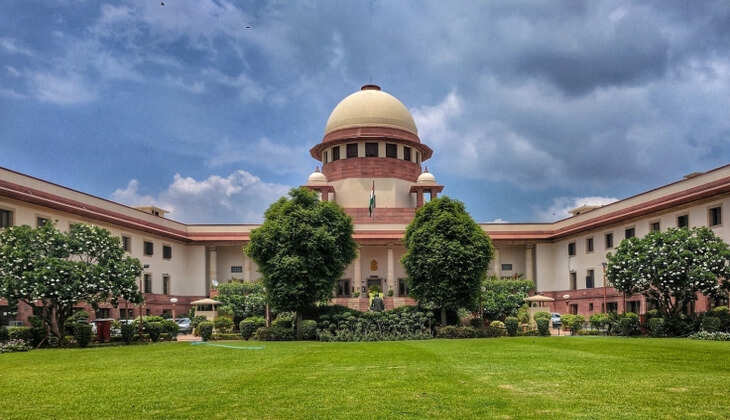
In a landmark decision, the Supreme Court of India has ruled that the sub-classification of Scheduled Castes (SCs) is permissible for the purpose of granting reservations. The ruling, delivered on Thursday, marks a significant shift in the interpretation of reservation policies.
A seven-judge Bench, led by Chief Justice of India DY Chandrachud, made the decision with a 6:1 majority, overturning the 2004 judgment in E V Chinnaiah vs State of Andhra Pradesh. The earlier ruling had asserted that Scheduled Castes formed a homogeneous group, prohibiting any sub-division among them for reservation purposes.
"Historical and empirical evidence suggests that Scheduled Castes are not a homogeneous class," Chief Justice Chandrachud stated while delivering the judgment. This new interpretation recognizes the varied levels of disadvantage within the SC community, allowing for a more nuanced allocation of reserved quotas.
Implications of the Ruling
The Supreme Court's decision means that within the existing 15% reservation for SCs, certain castes deemed more disadvantaged will be given greater preference. This approach aims to address the disparities within the SC community by providing more support to those who are most in need.
For instance, in 2006, the state of Punjab implemented a policy that allocated 50% of the SC reservation quota and first preference in public jobs to Valmikis and Mazhabi Sikhs. This ruling now legitimizes such measures, paving the way for other states to adopt similar policies to ensure equitable distribution of reservation benefits among various sub-groups within the SC community.
The Supreme Court's decision to allow the sub-classification of Scheduled Castes for reservations is a historic move that acknowledges the diverse levels of disadvantage within the SC community. By overturning the 2004 judgment, the court has opened the door for more targeted and effective reservation policies aimed at uplifting the most disadvantaged sub-groups within the Scheduled Castes.
