
Understanding UPSC's Lateral Entry and the Controversy Surrounding It
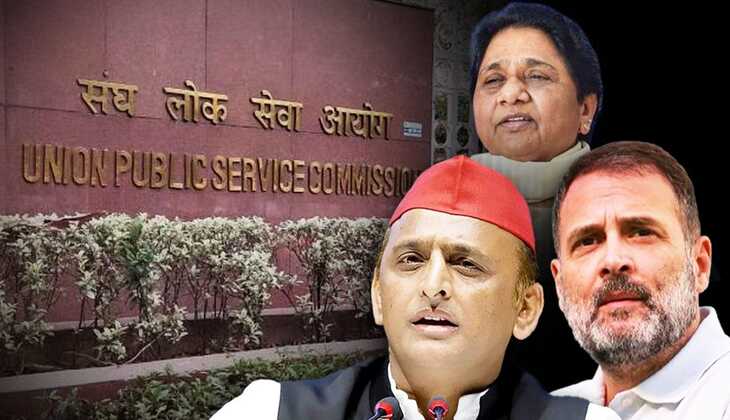
The Union Public Service Commission (UPSC) has recently announced vacancies for 45 positions across various ministries under the lateral entry scheme. These positions include Joint Secretaries, Deputy Secretaries, and Directors. This move has sparked significant controversy, with opposition leaders criticizing the process as unconstitutional. Here's an overview of what lateral entry is and why it has become a contentious issue.
What is Lateral Entry?
Lateral entry into the Indian bureaucracy was introduced in 2018. Unlike traditional recruitment through the UPSC civil services exam, lateral entry allows experienced professionals from the private sector and other fields to join the government at senior levels. This approach aims to bring diverse expertise into the bureaucracy, enhancing its efficiency.
The lateral entry process bypasses the usual UPSC examination stages—Prelims, Mains, and Interview—and instead relies solely on interviews for selection. This method was initially implemented for nine Joint Secretary positions in 2018.
Current Recruitment Details
The latest recruitment under the lateral entry scheme involves 10 Joint Secretary positions and 35 Director/Deputy Secretary positions. These roles are distributed across various ministries: two positions in the Ministry of Finance, one each in the Ministries of Home Affairs and Electronics and IT, eight in the Ministry of Agriculture, two in the Ministry of Education, and one each in the Ministries of External Affairs and Civil Aviation. Appointments will be on a three-year contract, extendable up to five years based on performance.
Eligibility Criteria
- Joint Secretary: Minimum of 15 years of experience; age between 40 to 55 years.
- Director: Minimum of 10 years of experience; age between 35 to 45 years.
- Deputy Secretary: Minimum of 7 years of experience; age between 32 to 40 years.
Candidates from state governments, public sector enterprises, autonomous bodies, universities, research institutions, private sector companies, consultancy organizations, and international or multinational organizations are eligible. Current central government employees cannot apply.
Opposition Criticism
The opposition has voiced strong objections to this recruitment method:
- Akhilesh Yadav: The former Chief Minister of Uttar Pradesh claims that the BJP is using this process to appoint ideologically aligned individuals to senior positions through the "backdoor."
- Mayawati: The BSP leader argues that this recruitment process undermines opportunities for existing employees and might violate constitutional provisions if SC, ST, and OBC quotas are not respected.
- Tejashwi Yadav: The former Deputy Chief Minister of Bihar criticizes the lack of reservation in these appointments, arguing that if UPSC had conducted the recruitment through civil service exams, it would have included reservations for SC/ST and OBC candidates.
- Rahul Gandhi: The Congress leader accuses the government of undermining reservations for SC, ST, and OBC categories through privatization of IAS positions, which he views as part of a broader agenda to eliminate these reservations.
Conclusion
UPSC's lateral entry scheme represents a significant shift in the recruitment process for senior government positions. While it aims to inject new expertise into the bureaucracy, it has also generated debate about its implications for constitutional norms and reservation policies. The controversy highlights the complex interplay between innovation in governance and the adherence to established norms.
