
From Paddles to Books: Archana Kamath's Bold Exit from Table Tennis Sparks Debate on Sport's Future in India
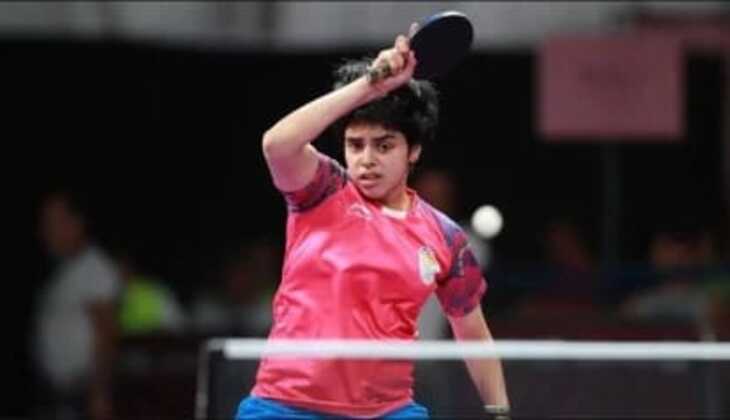
In a surprising turn of events, 24-year-old table tennis star Archana Kamath, fresh from a remarkable performance at the Paris Olympics, has decided to step away from professional sports. Her coach, Anshul Garg, was left stunned when she revealed her intention to quit table tennis to focus on her academic career in the United States. Despite her success, Archana saw no long-term future in the sport and believed that pursuing education would be more beneficial for her future.
Archana's journey to the Paris Olympics was not without challenges. Her selection over Ayhika Mukherjee, who had recently defeated World No. 1 Sun Yingsha, sparked controversy. However, Archana silenced critics by playing a crucial role in India's historic achievement—reaching the quarterfinals in the team event, the best performance ever by the Indian women's table tennis team at the Olympics. She was the sole victor for India in their match against Germany, winning against the highly-ranked Xiaona Shan. After the match, Archana candidly asked Garg whether there was any realistic chance of winning a medal at the next Olympics in Los Angeles in 2028.
Garg struggled to find an encouraging response. Table tennis has long been dominated by Chinese players, who have consistently won gold in both the men's and women's team events since 2008. While countries like Japan, Korea, and Chinese Taipei have managed to compete, India's performance remains far behind. The best individual result for India was when Manika Batra and Sreeja Akula reached the Round of 16 in Paris. A podium finish still seems distant.
"I told her it would be difficult," Garg said, acknowledging the hard work required to compete at the highest level. Despite Archana's recent improvements, ranked outside the top 100 globally, her mind seemed made up. The financial realities of the sport, where earnings are meager unless you reach the semifinals or beyond, led her to prioritize her academic ambitions. Although she received support from the Target Olympic Podium Scheme (TOPS), Olympic Gold Quest (OGQ), and other sponsors, Archana's ultimate goal was always an Olympic medal. With her academic talents also being strong, she decided to pursue further studies abroad.
"My brother, who works at NASA, has always been my role model," Archana had said earlier, highlighting her passion for academics. Encouraged by her family and aware of the limited financial prospects in table tennis, she opted to enroll at the University of Michigan.
Her father, Girish, expressed no regrets about her decision. "Archana has always been academically inclined, earning a degree in Economics and recently completing her Master's in International Relations, Strategies, and Security. After more than 15 years of dedication to table tennis, representing India at the Olympics, she felt it was time to follow her other passion—academics. She made this tough choice after giving her all to the sport and the country," he told The Indian Express.
Archana's decision raises important questions about the economic viability of pursuing table tennis professionally in India. Kamlesh Mehta, an eight-time national champion and current secretary of the Table Tennis Federation of India (TTFI), believes the situation is improving.
"Table tennis is attracting more corporate support, and leagues like Ultimate Table Tennis (UTT) are backed by corporate owners. Professional sports agencies are also stepping in, and the government, along with TTFI, is doing its best to support players. The growing number of professional academies in the country is proof of this progress. Our performance on the international stage, especially in youth tournaments, indicates that we are on the right track," Mehta said.
However, Garg highlighted a critical issue: the need to support upcoming players financially. "Top players generally have ample support, but what about those on the rise? While they receive assistance in training and equipment, the financial challenges can be overwhelming. Archana's decision is understandable in this context," he explained.
National coach Massimo Costantini emphasized the need for a robust system that allows athletes to view sports as a sustainable career. "When I saw Archana compete, I thought we had added another significant player to Indian table tennis. I knew she always valued academics, so her decision didn't surprise me. However, it underscores the need to create a system where sports can be a viable career option. We must also ensure a brighter future for those who dedicate their lives to representing the country," Costantini stated.
