
Guru Nanak's Journey from Mecca to Tibet: How His Travels Reshaped Faith Across Borders
Guru Nanak’s journey from Mecca to Tibet reshaped faith across borders. His teachings of equality, unity, and selfless service (seva) resonated with Islam, Buddhism, and Sikhism, leaving a legacy of peace and compassion that continues to inspire.
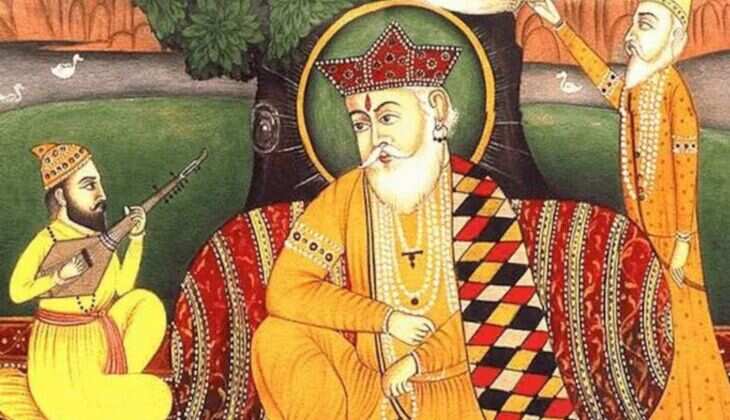
The travels of Guru Nanak, the founder of Sikhism are not a historical account merely of his individual spiritual search but rather a deep influence that reverberated across numerous faiths-from Mecca to Tibet, all the different religious traditions that he entered and saw were such that his message of unity, selfless service, and equality continues to inspire millions, cutting across religiously segregated areas.
Guru Nanak's message, making waves all the way through the core of Sikhism, has helped to alter the religious thinking and practices of Islam, Buddhism, and others. His distinct legacy lies in being able to connect with different faiths and cultures, talking about a universal connection to godhead. Here's how the historical journey of Guru Nanak from Mecca to Tibet influenced global spiritual thought and changed interfaith dialogues over time.
Guru Nanak Travels: Spiritual Journey
Guru Nanak's Udasis thus spanned thousands of miles and swept to Mecca, Medina, Mount Sumeru, Tibet, and many other spiritual and cultural centers of the day. His journey was one not only of miles but also of spiritual revolutions; he had created a platform spiritually, with principles of equality, compassion, and selfless service, which resonated across communities.
Unlike most religious leaders, Guru Nanak did not want to impose his preachings on people but invited people from all walks of life to feel spirituality by coming humbly and truthfully. He spoke out a message of direct association with God and inner spiritualism, something that was very new to the world at that time and became the bedrock from which the values of Sikhism come alive among diverse followers.
Perhaps the most famous journey by Guru Nanak was to Mecca, the holy place under Islam. How his meeting with Muslim scholars established faith in the oneness of religion is of invaluable value in that context. One very commonly quoted story establishes how the Islamic scholars questioned him for laying down by stretching his feet towards the Kaaba. When questioned as to why he seemed to pay such disrespect to the Kaaba, Guru Nanak replied, "Where God is not, there is no sanctity." That great message underscored the thought that divinity transcended human construct and that the very substance of God was humility rather than ritual or religious exclusivity.
Guru Nanak's philosophy was not only a religious shocker of his times but also gave the world the idea of Sarbat da Bhala - the welfare of all. His precepts in Mecca and other travels always tended to unite people, whatever the religion that separates them.
Tibetan Buddhism and Guru Nanak Influence
While his visit to Mecca and Medina is quite well documented, the impact of Guru Nanak on Tibetan Buddhism is another interesting dimension of his spiritual journey. According to some authentic records, the impact of Guru Nanak has been felt well in the context of Tibetan Buddhism. Tibetan Buddhists have considered Guru Nanak as a reincarnation of Padmasambhava, one of the very formidable religious personalities of Tibetan Buddhism.
Padmasambhava was the "second Buddha" who had founded Tibetan Buddhism in the 8th century, and Guru Nanak's journey to Tibet was seen as a continuation of his spiritual message. The Tibetan Buddhists felt that Guru Nanak's message of equality, compassion, and devotion to one god corresponds to their vision of the world. The universal appeal of Guru Nanak and his message of one God, free of sectarian divisions, has a profound impact upon the Tibetan spiritual community.
Guru Nanak's Legacy in Sikhism: Langar and the Joy of Seva
As a result, in his development of his spiritual society, Guru Nanak walked across and created a space where people of all religions and classes of life were not only permitted to enter but belonged. This foundation for equality is at the very heart of Sikhism and was more concretely explicated through the institution of Langar-a community kitchen where free meals are distributed to whomever needs them. It finds its origin in the experiences and teachings of Guru Nanak about selfless service (seva), wherein different types of people can assemble in unison.
The concept of Langar is indeed expansive in implications in both Sikhism and Islam, especially in the context of selfless service. Guru Nanak was a symbol of selflessness and believed in serving humanity; these values form the core of both Islamic and Sikh traditions. Many, in Islam, pay regard to the legacy of Guru Nanak, who put forth the idea of the necessity of helping others - an approach that becomes synonymous with zakat and ummah in the Islamic context.
Guru Nanak's Universal Appeal: Sikhism, Islam, and Buddhism
Visting the universe, Guru Nanak met the heads, sages, and spiritual workers of other religions too. Those dialogues with Hindu, Muslims, and Buddhists told them that he is a universal figure. His discourses bridged the sectarian lines and opened up a path of spiritual unity that resonates in the hearts of millions today.
Guru Nanak's message of one God, transcending all human distinctions, is a testament to his proper understanding of the human spirit and its relation to the divine. His travels and teachings were foundational for Sikhism but also influenced such a wide range of spiritual and religious communities- the Muslim Sufi poets to the Buddhist monks in Tibet. It was this kind of spiritual personality which, in his lifetime, remained unique for his work in bridging the faith gaps between the different faiths.
Guru Nanak and the flowering of religious thought and practice
Indeed, the influence of Guru Nanak on religious thought goes deep since his teachings not only changed Sikhism but also exerted a unique influence on the philosophies of Islam and Buddhism. His thoughts about unity, selfless service, and equality have influenced millions of people in this world by scrapping national and cultural barriers. When he trekked from Mecca to Medina to Tibet, the circumstances stimulated dialogues across various faiths, and thus ushered in a new era to a whole more inclusive harmonious world.
Also Read: Faridabad Incident: Shopkeeper Stands Strong Against Armed Robbers