
From “Gungi Gudiya” to “Iron Lady”: The Remarkable Journey of Indira Gandhi - Read Now
Indira Gandhi evolved from "Gungi Gudiya" to India’s "Iron Lady" through bold decisions like the Green Revolution, Bangladesh Liberation War, and Pokhran nuclear tests. Her leadership transformed India and cemented her legacy as a fearless and visionary Prime Minister.
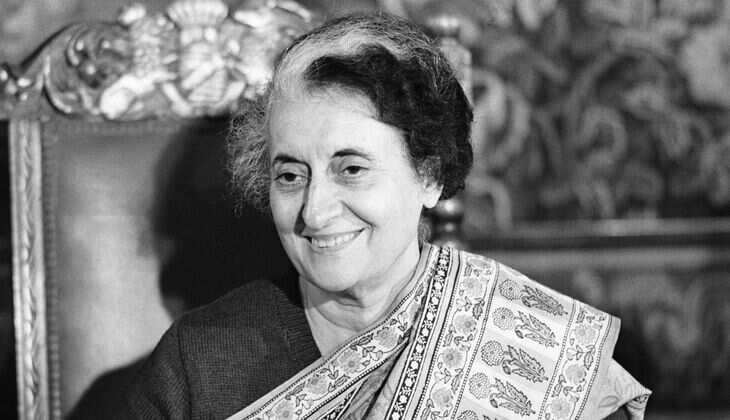
The nation observes the birth anniversary of India's first woman Prime Minister, Indira Gandhi, on November 19, 2024. Her transformation from being described as a "Gungi Gudiya" or Silent Doll to earning the title of the "Iron Lady" is indeed a great story of grit and resilience and bold leadership.
Her journey is not only a testament to her courage but also a reflection of her decisive actions that reshaped India’s political and socio-economic landscape.
Early Life and the “Gungi Gudiya” Remark
Born on November 19, 1917, in Allahabad now Prayagraj, Indira Priyadarshini Gandhi belonged to a political family. Her father was Jawaharlal Nehru, a key figure during India's fight for independence and also the country's first Prime Minister. Young Indira, despite her privileged life, was rarely considered for leadership.
It was definitely not an auspicious political debut. When she became Prime Minister in 1966, after the death of Lal Bahadur Shastri, experienced politicians like Morarji Desai sneeringly referred to her as a "Gungi Gudiya" or "Silent Doll," that she would never amount to much. Less than a year later, this "Silent Doll" silenced her sceptics with leadership and vision.
Feeding a Nation: The Green Revolution
Perhaps the biggest impact of Indira Gandhi was the Green Revolution, the most progressive initiative which had been undertaken in the 1960s and 1970s to make India self-reliant in its food production.
Her policies encouraged high-yielding crop varieties, irrigation, and other modern agricultural techniques.
The outcome was an absolute increase in agricultural output, bringing India to an end while no more imports for food and food security for millions.
This achievement not only uplifted rural India but also showcased her capability to make bold decisions under pressure, earning her the trust of the masses.
Bangladesh Liberation War: A Defining Moment
The 1971 Bangladesh Liberation War was a turning point in Indira Gandhi’s political career.
When millions of refugees fled to India due to political turmoil in East Pakistan (now Bangladesh), Indira Gandhi extended unwavering support.
When she declared military assistance to the Bangladeshi freedom fighters, she had a decisive defeat of Pakistan and Bangladesh was a newly independent nation.
Her decisive leadership in the war had enhanced India's status on the international level and made her assertively positioned as a strong and strategic leader.
Pokhran Nuclear Test: India became a Nuclear Power
In 1974, Indira Gandhi initiated India's first nuclear test at Pokhran, Rajasthan, code-named "Smiling Buddha."
This bold step projected India into becoming a nuclear state. Though this action earned a lot of criticism from the international circuit, it boosted her nationalistic image and reflected her willingness to take an arrogant step for long-term security of India.
The nuclear test further stamped her title as the "Iron Lady," depicting her unflinching determination in the face of grave distress.
Challenges and Controversies: The Emergency
However, much of her success lay in her decisions, some of which had been very controversial. Among these, the most striking one has perhaps been the Emergency of 1975-77.
Declared under her recommendation, the Emergency suspended civil liberties, censored the press, and led to mass arrests of political opponents.
Though intended to stabilize the country during political unrest, it was widely criticized as an authoritarian move leading to her defeat in the 1977 elections.
Indira Gandhi returned to power in 1980 showing a resilient and tenacious leadership that gained public trust once again.
Her Assassination: A Tragic End
Indira Gandhi met her tragic death on 31 October 1984. Sikh bodyguards assassinated her after she had decided to authorize Operation Blue Star-the military action to clear militants from the Golden Temple in Amritsar. This decision, allegedly taken to preserve national unity, did create the opposite results and increased communal tensions.
The transformation of Indira Gandhi from "Gungi Gudiya" to the "Iron Lady" speaks volumes of her persistence and strength. Her big decisions, which she has made from the Green Revolution to the Bangladesh War to nuclear tests, continue to define her legacy.
Indira's leadership inspired generations of women and proved that determination and courage could overcome even the toughest criticism. Being remembered as a visionary leader on her birth anniversary, she redefined the destiny of India.
Also Read: 25 Paise Bounty: Bharatpur Police's Unique Move to Humiliate Wanted Criminal Goes Viral