
'One Nation, One Election': Political Parties Divided Over Constitutional Amendment Bill
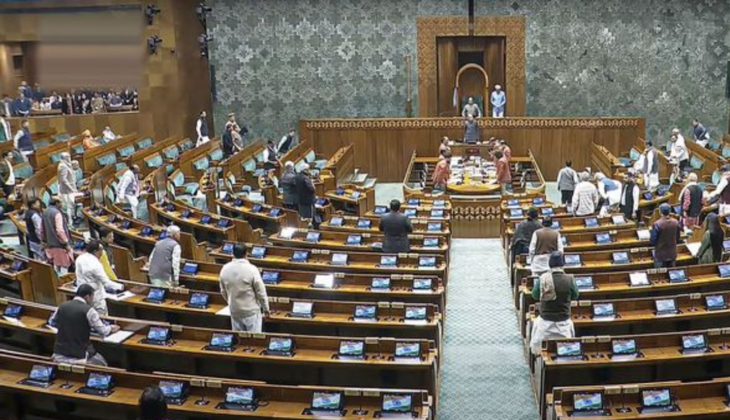
'One Nation, One Election': The Indian government has on Tuesday introduced the Constitution (129th Amendment) Bill, 2024 and the Union Territories Law (Amendment) Bill, 2024 in parliament to implement the concept of 'One Nation, One Election.' The bills are presented by Law Minister Arjun Ram Meghwal in the Lok Sabha with heated debates and opposition protests.
What is the 'One Nation, One Election' Bill?
The proposed bill will synchronize Lok Sabha and state assembly elections in India, which will reduce the number of elections and associated costs. However, the move has sparked a fierce debate among political parties, with opinions divided on its implications for the Constitution and federal structure.
Key Political Reactions to the Bill
Congress strongly opposed the bill, with MP Manish Tewari calling it unconstitutional and violating the basic structure of the Constitution. He argued that the bill undermines the principle of federalism and grants excessive powers to the President and the Election Commission. Congress MP Gaurav Gogoi criticized the proposal, saying it shifts the balance of power and raises questions about its legality under the Constitution's Seventh Schedule.
Samajwadi Party's Criticism
Samajwadi Party MP Dharmendra Yadav criticized the BJP for trying to introduce a dictatorship regime. He said the poll management was faulty and simultaneous elections could not be held across the country.
Left Parties and DMK Objection
Left MP Amraram labeled it as an attack on democracy: it undermined the powers of the state assemblies and the local bodies. The bill should be sent to the JPC, says the DMK leader, T.R. Baalu who opposes it. DMK asked that it not be rushed into law by getting two-thirds majority in parliament while introducing the same.
Contrarily, its NDA allies, such as Shiv Sena and Telugu Desam Party (TDP), publicly advocated for this bill, considering it can facilitate the election process as well as alleviate the load on the treasury.
Discussion in Lok Sabha
The presentation of the bill caused much turmoil in the Lok Sabha, which resulted in a division of votes. After much discussion, the bill was introduced and referred to the Joint Parliamentary Committee (JPC) for a detailed examination.
