
Modi-Trump Reset at G7 Signals Bigger Shift in Global Politics
The Modi-Trump meeting at the 2026 G7 Summit highlighted India's growing role in global diplomacy, with discussions on trade, energy security, Ukraine, Iran and maritime safety shaping the future geopolitical landscape.
Trade, Ukraine, Iran and India's Rising Global Role Take Centre Stage
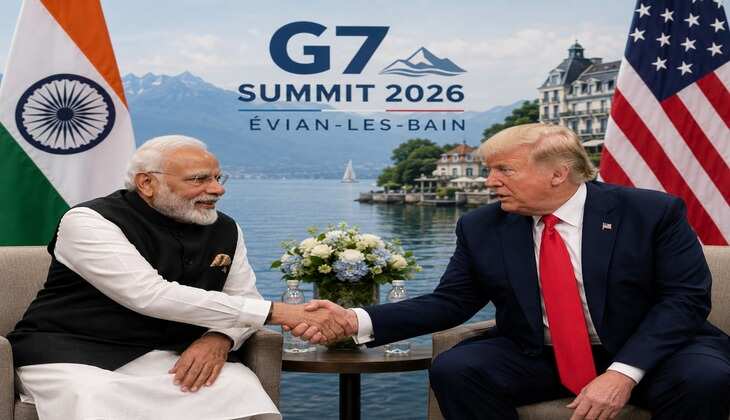
The 2026 G7 Summit in Évian, France, became much more than a meeting of the world's richest democracies. It turned into a stage where global diplomacy, trade, security and energy politics intersected. At the centre of these developments was Prime Minister Narendra Modi's meeting with US President Donald Trump, alongside discussions on Ukraine, Iran and global energy security.
The summit indicated that India is increasingly becoming an indispensable player in international affairs, even though it is not a member of the G7.
Trump Calls Modi a 'Great Friend' Again
One of the biggest highlights was the bilateral meeting between Donald Trump and Narendra Modi, their first face-to-face interaction since Trump's return to the White House.
Trump described Modi as a "great friend" and praised him as a tough negotiator, signalling that despite disagreements over tariffs and trade, both countries remain committed to strengthening ties. The two leaders discussed expanding bilateral trade, maritime security, and the safety of Indian seafarers working in the Gulf region.
Interestingly, during this meeting Trump did not repeat his earlier claims of personally stopping an India-Pakistan conflict something he had mentioned on previous occasions. Instead, the conversation focused on future cooperation rather than past disputes, suggesting a more pragmatic diplomatic approach.
A Different Tone from Trump
Another moment that caught international attention came when Trump jokingly remarked that foreign reporters were "much nicer" than the American media while speaking alongside Modi.
Although light-hearted, the comment reflected Trump's continuing criticism of US media while also creating a relaxed atmosphere during a meeting dominated by discussions on global challenges.
Diplomatic observers viewed the exchange as an effort to project personal chemistry between the two leaders amid complex geopolitical negotiations.
Ukraine Remains a Global Priority
While India and the United States focused on bilateral issues, Ukraine remained central to the G7 agenda. Ukrainian President Volodymyr Zelenskyy announced that G7 leaders had reaffirmed their commitment to supporting Ukraine's defence capabilities and protecting its energy infrastructure from continued Russian attacks.
The renewed pledge signals that Western nations remain committed to Kyiv despite the prolonged conflict and increasing pressure on global economies.
For India, maintaining balanced relations with both Russia and the West continues to be a delicate diplomatic challenge.
Iran Deal Brings Relief to Oil Markets
Another significant development was the easing of tensions between the United States and Iran.
Reports that negotiations had reopened and shipping through the Strait of Hormuz had resumed helped bring down international crude oil prices after months of volatility.
This is particularly important for India, which imports nearly 85% of its crude oil requirements. Lower oil prices could reduce inflation, improve the government's fiscal position and lower fuel import costs for businesses and consumers.
India's Strategic Balancing Act
Prime Minister Modi used the summit not only to strengthen ties with the United States but also to raise issues directly affecting Indian interests.
He highlighted the safety of Indian seafarers, emphasising that lakhs of Indians work aboard international ships and that secure maritime routes are essential for global trade and India's economy.
The message demonstrated India's effort to shape global conversations beyond regional issues and position itself as a responsible stakeholder in international security.
The Bigger Picture
The G7 Summit underscored three major geopolitical trends.
First, India-US relations remain strategically important despite occasional disagreements on trade and tariffs. Second, the Ukraine war continues to dominate Western security priorities, ensuring that military and financial support for Kyiv remains intact.
Third, developments in the Middle East—particularly US-Iran diplomacy and the reopening of key shipping routes—have immediate consequences for global energy markets and countries like India that rely heavily on imported oil.
Taken together, these developments show that India's diplomatic influence is expanding. Rather than being a bystander, New Delhi is increasingly participating in conversations that shape global trade, energy security and international peace. The Modi-Trump meeting at the G7 was therefore not just another bilateral engagement—it reflected India's growing importance in an increasingly multipolar world.