
Sahara Desert Flooded for First Time in 50 Years: Climate Change Turns the Heat into a Deluge!
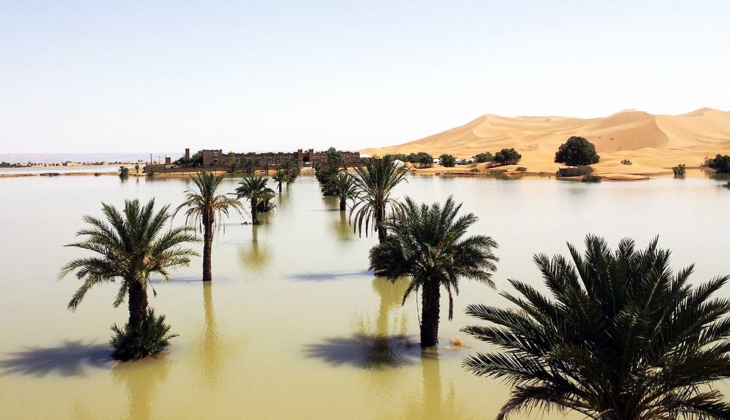
For the first time in half a century, the Sahara Desert experienced a major flood, leaving scientists stunned and raising concerns about climate change. Heavy rainfall led to flash floods in parts of the desert, particularly in the region near Morocco. The sudden deluge transformed the arid landscape, with areas receiving more rain in two days than they typically see in a year.
Unprecedented Rainfall in the Sahara
The village of Tagounite, located near Tata, 450 kilometers from Morocco’s capital, Rabat, was the hardest hit by the rainfall. In just one day, the village saw 100 millimeters of rain, far surpassing the annual average. The rainfall not only caused flash floods but also led to the revival of Lake Iriqui, which had been dry since 1925.
The event is a stark anomaly for the Sahara, a desert known for its extreme heat and dryness. The sudden flooding came as a shock to both locals and experts, as the region had not seen such intense rainfall for decades.
Climate Change in the Spotlight
Moroccan meteorologist Hussein Youab explained that this unusual weather is a result of climate change, which is altering weather patterns across the globe. "The atmosphere had been showing increased humidity in recent days, which suggested that extreme weather events might occur even in the Sahara," Youab stated. He warned that these changes could become more frequent in the future, signaling a shift in the region’s long-standing climate patterns.
While the rain helped replenish groundwater and provided relief to farmers suffering from drought, it also proved dangerous. Flash floods claimed the lives of 18 people, and several areas saw significant damage to crops.
A Mixed Outcome
For local farmers, the rain was a welcome change after years of drought. However, the flash floods and sudden change in weather were both a blessing and a curse. Though it helped revive agriculture in some parts, it also brought destruction. The Moroccan government has been delivering relief materials and compensation to affected families, as the region continues to recover from the devastation.
The Sahara, covering 9 million square kilometers, is known for its extreme temperatures and harsh living conditions. However, the effects of global warming are now being felt even in this desert. Scientists predict that such events may become more common as climate change continues to disrupt weather patterns globally.
This rare flooding event highlights the unpredictable and dangerous consequences of climate change and serves as a reminder that even the most arid and inhospitable regions are not immune to its impact.
