
US Caught Between Peace and Pressure as Netanyahu Defies Calls for De-escalation
Growing differences between Washington and Israel over Iran have exposed strategic tensions, as the US pushes for diplomacy while Prime Minister Netanyahu signals continued military pressure, raising concerns about regional stability.
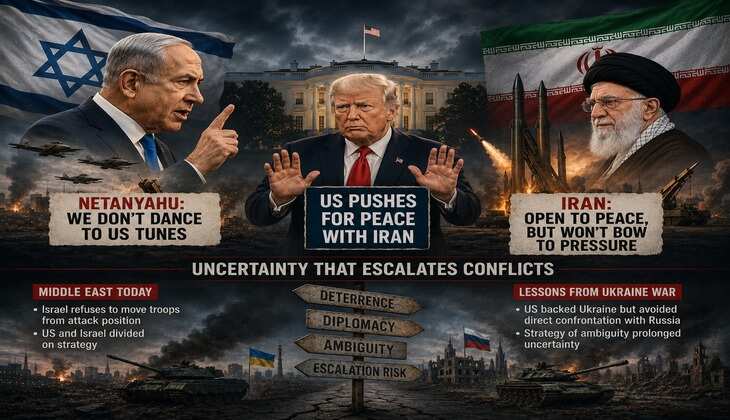
A growing divide between the United States and Israel has emerged over the future of the Iran conflict, with Israeli Prime Minister Benjamin Netanyahu signaling that his government will not alter its military posture despite Washington's renewed push for a diplomatic settlement with Tehran. Analysts say the differing approaches have exposed a strategic uncertainty that risks prolonging tensions in the region.
Netanyahu Signals Independent Course
Reports indicate that Netanyahu remains reluctant to ease military pressure on Iran and its regional allies, arguing that Israeli security concerns cannot be addressed through diplomacy alone. The Israeli leader has increasingly signaled that his government will make decisions based on its own security calculations rather than Washington's preferences.
The stance comes as the Trump administration seeks to advance a broader peace framework with Iran, including efforts to reduce hostilities and stabilize key flashpoints across the Middle East.
Washington's Mixed Signals
While the United States has pursued negotiations and publicly expressed a desire to transform relations with Iran, it has also maintained pressure through military deterrence and strong rhetoric. Critics argue that this combination of diplomacy and coercion has created uncertainty about Washington's long-term objectives.
Supporters of the administration, however, contend that maintaining pressure while negotiating is necessary to secure concessions and prevent a wider conflict.
A Familiar Pattern
The current situation has drawn comparisons with the United States' approach during the Russia-Ukraine war. During that conflict, Washington backed Ukraine militarily while simultaneously seeking to avoid direct confrontation with Russia and keep diplomatic channels open.
Critics argued that the strategy created ambiguity, providing enough support to sustain resistance but not enough clarity to bring a rapid resolution. Supporters countered that the approach prevented a broader war between nuclear powers. The debate over whether strategic ambiguity prevents escalation or prolongs conflict remains unresolved.
Diverging Interests
Recent developments suggest that U.S. and Israeli interests may no longer be perfectly aligned. While Washington appears increasingly focused on securing a diplomatic breakthrough with Iran, Israeli leaders remain concerned that any agreement could leave key security issues unresolved.
This divergence has raised questions about the future of one of the world's closest strategic partnerships and whether Washington can successfully balance its commitment to Israel with its pursuit of a broader regional settlement.
Uncertainty as a Risk Factor
Foreign policy experts warn that uncertainty can be dangerous during periods of heightened tension. When allies and adversaries receive different signals about intentions and red lines, the chances of miscalculation increase.
As negotiations continue and military forces remain on alert, the Middle East once again finds itself at a crossroads. Whether diplomacy ultimately prevails or tensions escalate further may depend on how effectively Washington can align its peace efforts with the realities on the ground.