
Apple Officially Sues OpenAI Over Alleged Trade Secret Theft. Here's What the Lawsuit Says
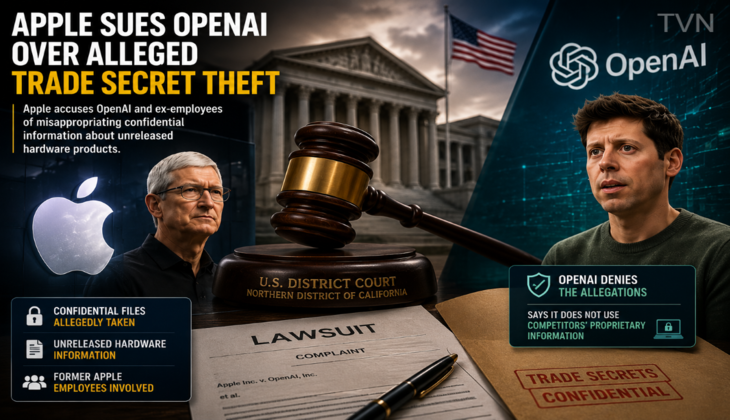
Apple has filed a lawsuit against OpenAI, accusing the ChatGPT maker of misappropriating trade secrets and confidential information related to Apple's hardware development. The case, filed in the U.S. District Court for the Northern District of California, marks one of the biggest legal confrontations in the rapidly evolving artificial intelligence industry.
The lawsuit names OpenAI, two former Apple employees and OpenAI's recently acquired hardware startup, io Products, as defendants. Apple alleges that the company engaged in a coordinated effort to obtain confidential information as it expanded its ambitions in AI-powered consumer hardware. OpenAI has denied the allegations and said it has no interest in using another company's proprietary information.
What Is Apple Alleging?
According to Apple's 41-page complaint, two former employees, Chang Liu and Tang Yew Tan, took confidential information related to Apple's unreleased products before joining OpenAI's hardware division.
Apple claims Liu retained access to Apple's systems after leaving the company and downloaded sensitive engineering files. It also alleges that Tang shared confidential supplier information and encouraged job candidates to bring proprietary Apple materials, including hardware samples and CAD designs, during interviews.
The company argues that these actions were part of a broader effort to gain an advantage in the race to develop AI-powered hardware products. Apple has described the alleged conduct as a systematic campaign to acquire trade secrets rather than isolated actions by former employees.
Why Is This Case Important?
The lawsuit goes beyond a dispute between two technology companies.
OpenAI has rapidly expanded beyond software after acquiring io Products, a startup founded by former Apple design chief Jony Ive and backed by OpenAI CEO Sam Altman. The acquisition signalled OpenAI's intention to enter the consumer hardware market, putting it on a potential collision course with Apple.
Apple argues that the alleged misuse of confidential information threatens years of research and billions of dollars invested in developing future products.
What Does OpenAI Say?
OpenAI has rejected Apple's allegations, stating that it does not seek or use competitors' proprietary information. The company has said it intends to defend itself in court and disputes Apple's characterisation of its hiring practices and hardware development efforts.
At this stage, the allegations remain claims made in a civil lawsuit. The court has not determined whether any trade secrets were stolen or whether OpenAI violated the law.
What Could Happen Next?
Apple is seeking damages as well as court orders to prevent the alleged use of its confidential information. The litigation is expected to involve extensive discovery, including internal documents, emails and testimony from former employees.
Legal experts believe the case could become one of the most closely watched technology lawsuits in recent years because it sits at the intersection of artificial intelligence, intellectual property and the growing competition to build AI-powered devices. The outcome may also influence how technology companies recruit employees from rivals and protect confidential research in the future.
A New Front in the AI Race
The lawsuit highlights how competition in artificial intelligence is moving beyond chatbots and software into hardware, where companies are investing heavily in the next generation of AI devices.
For Apple, the case is about protecting years of proprietary research and maintaining its competitive edge. For OpenAI, it represents a legal challenge that could affect its hardware ambitions at a time when it is expanding rapidly beyond AI models.
As the case moves through the courts, it is likely to become a landmark dispute over intellectual property, employee mobility and competition in the AI industry. Until a court reaches a decision, Apple's allegations remain unproven, and OpenAI continues to deny any wrongdoing.