
Jharkhand Job Aspirants Unite in Protest: Recruitment Delays Push Youth Movement
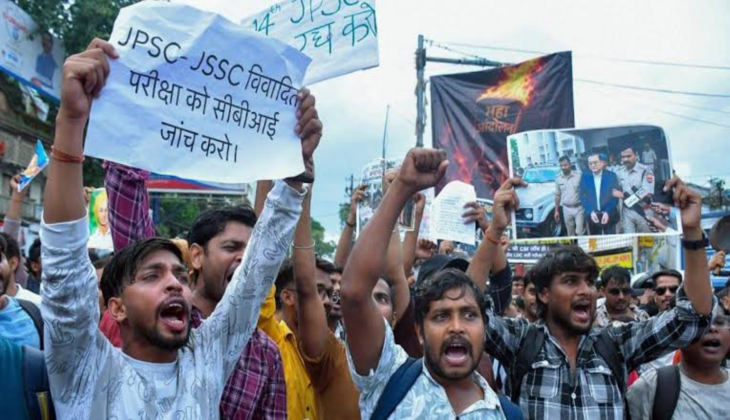
What started as scattered protests by government job aspirants in Jharkhand has now transformed into a larger movement, bringing together thousands of young candidates preparing for various competitive examinations.
From recruitment delays to postponed exams and pending appointment processes, aspirants across categories have come together with a common demand: a transparent, time-bound recruitment system that provides clarity and stability for their future.
The growing movement reflects a larger frustration among educated youth who have spent years preparing for government jobs but continue to face uncertainty due to administrative delays.
Years Of Preparation, But No Clear Roadmap
For many aspirants, government examinations represent a pathway to financial security and career stability. However, repeated delays in recruitment processes have created anxiety among candidates who say their years of preparation are being wasted.
Protesters claim that several examinations have either been postponed multiple times or have failed to reach the final appointment stage despite completion of necessary procedures.
Many candidates argue that the absence of a fixed recruitment timeline has left them struggling to plan their careers.
For some aspirants, the delays have also created age-related concerns. Candidates who have spent years waiting for recruitment notifications fear losing opportunities because they may cross the eligibility age limit for certain examinations.
A Common Platform For Different Aspirants
One of the defining features of the Jharkhand protest movement is the unity among candidates from different recruitment categories.
Instead of focusing on individual examination-related demands, aspirants have joined hands to raise broader concerns about employment policies and recruitment reforms.
Candidates preparing for different government positions have found common ground in their demand for accountability, faster recruitment cycles and a predictable examination schedule.
This collective approach has given the movement a wider reach, turning separate grievances into a larger youth-driven campaign focused on employment.
Different From Delhi's Recent Protests
The Jharkhand protests are also being viewed differently from the recent demonstrations seen in Delhi.
While the protests in the national capital became politically charged, with parties accusing each other over the role of students and allegations of political mobilisation, the agitation in Jharkhand has so far remained centred almost entirely on employment and recruitment.
Rather than raising broader ideological or political issues, job aspirants in Jharkhand have focused on delayed examinations, pending appointments and the demand for a transparent recruitment calendar.
The movement has largely been driven by students and job seekers themselves, with participants from different examinations coming together under a shared cause.
Although political parties have responded to the protests, the core demands have remained employment-centric, giving the movement a distinctly issue-based character.
Employment Becomes A Major Youth Concern
The protests have once again highlighted employment as one of the biggest concerns among India's youth.
Across several states, delays in government recruitment have become politically sensitive, with unemployment emerging as a major electoral issue.
Student organisations and civil society groups have also extended support to the movement, arguing that timely recruitment is essential for restoring confidence among young people preparing for government careers.
The demonstrations underline a growing demand for greater accountability and efficiency in public recruitment systems.
Political Attention Around The Movement
Given the importance of employment in electoral politics, the Jharkhand protests have naturally attracted political attention.
Opposition parties have criticised the government over recruitment delays and questioned its handling of employment-related issues.
The ruling alliance, meanwhile, has assured candidates that efforts are being made to resolve pending matters and streamline the recruitment process.
However, many aspirants say they are looking for concrete action rather than assurances.
Government Faces Pressure For Action
As the protests continue, job aspirants are demanding a structured recruitment calendar, timely examinations and greater transparency in appointments.
Protesters maintain that their movement is aimed at dialogue and solutions rather than confrontation.
The coming weeks will be crucial in determining whether the government announces concrete measures to address these concerns or whether the movement gathers further momentum across the state.
With employment emerging as a defining issue for young voters, the outcome of this protest could have implications beyond recruitment, shaping the political discourse in Jharkhand in the months ahead.
