
After Haldighati: The Untold Story of Kolyari, Where Maharana Pratap Continued His Struggle for Mewar
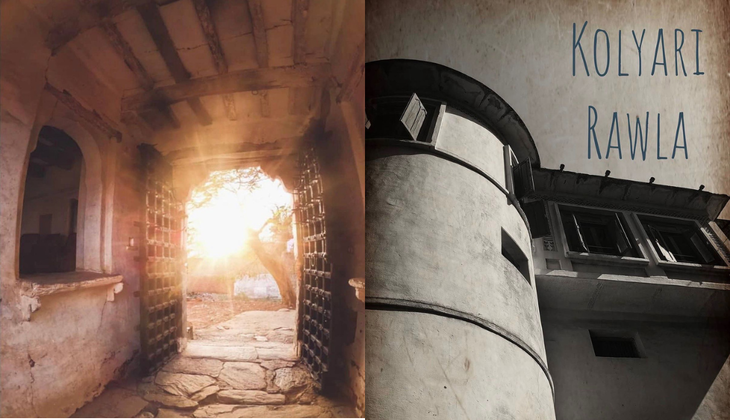
Maharana Pratap Jayanti Special
After Haldighati, Where Did Maharana Pratap Go? The Untold Story of Kolyari and a Forgotten Chapter of Mewar’s History
Every year, on Maharana Pratap Jayanti, millions across India remember the legendary ruler of Mewar for his courage, sacrifice, and unwavering commitment to freedom.
His name evokes images of the Battle of Haldighati, the loyalty of Chetak, and a warrior who chose hardship over surrender. Yet beyond the battlefield lies another story. A quieter story. One that is rarely discussed, even among those familiar with the history of Mewar.
It begins with a simple question.
What happened after the First Battle of Haldighati?
The battle may have ended, but Maharana Pratap’s struggle did not.
Refusing to submit, he continued his resistance against overwhelming odds. The years that followed were marked by hardship, strategic regrouping, and an extraordinary determination to preserve the sovereignty of Mewar.
It is during this period that the story leads us to a place that remains largely unknown outside Rajasthan.
A place called Kolyari.
Nestled amidst the Aravalli hills, Kolyari occupies a unique place in the historical memory of Mewar. According to local traditions, historical references, and generations of oral narratives, Maharana Pratap came to Kolyari after the First Battle of Haldighati. It is believed that this was one of the locations where he recuperated, reorganized his forces, and prepared for the next phase of his long struggle.
Today, standing quietly within the village is the historic Kolyari Rawla, a structure that continues to be associated with this remarkable chapter of history. Local accounts hold that Maharana Pratap stayed here during one of the most challenging periods of his life.
Within the Rawla stands the Bayan Mata Temple, which local traditions attribute to Maharana Pratap himself. The temple remains an enduring reminder of a time when faith, resilience, and duty were inseparable from the struggle for survival.
The story of Kolyari is also closely linked with the rugged landscape of the Aravallis and nearby Awargarh, a region that played an important role during Maharana Pratap’s years of resistance. Protected by forests and hills, these areas provided strategic refuge and allowed him to continue his campaign long after many believed the struggle was over.
Among the people of the region, one belief has endured through generations: whenever Mewar needed refuge, Kolyari stood ready to provide it.
Whether viewed as history, memory, or tradition, the sentiment reflects the deep connection between Kolyari and the House of Mewar. It is a connection that continues to shape the identity of the village even today.
What makes Kolyari particularly fascinating is that it represents a side of Maharana Pratap’s story that is often overlooked. History tends to celebrate great battles, but the true measure of a leader is often found in the days that follow defeat, uncertainty, and hardship.
The years after Haldighati demanded courage of a different kind.
They demanded endurance.
They demanded faith.
And they demanded an unbreakable commitment to a cause greater than oneself.
Kolyari stands as a reminder of those years.
Today, the historic Kolyari Rawla remains a living link to this legacy. The Rawla continues to be associated with the descendants of the House of Kolyari, whose lineage has remained intertwined with the history of Mewar for generations.
The title of Rawat, historically bestowed upon distinguished nobles and guardians of the kingdom, has long been associated with Kolyari and its role in the affairs of Mewar. Today, the legacy is represented by Rawat Saheb Kuldeep Singh of Kolyari, the present head of the House of Kolyari, whose family continues to preserve the heritage, stories, and traditions connected to this remarkable chapter of Mewar’s history.
As India celebrates Maharana Pratap Jayanti, perhaps it is also time to remember the places that helped shape his journey.
For while the Battle of Haldighati is known to every student of history, the story that followed is equally inspiring.
It is a story written not only in forts and battlefields, but also in villages, temples, forests, and forgotten pathways.
It is a story of resilience.
It is a story of Mewar.
And in many ways, it is a story that still lives in Kolyari.