
Cracking the UPSC Code: 10 Mind-Bending Interview Questions That Will Challenge Even the Sharpest Minds
Here’s a glimpse into the type of tricky questions that candidates might encounter during a UPSC interview:
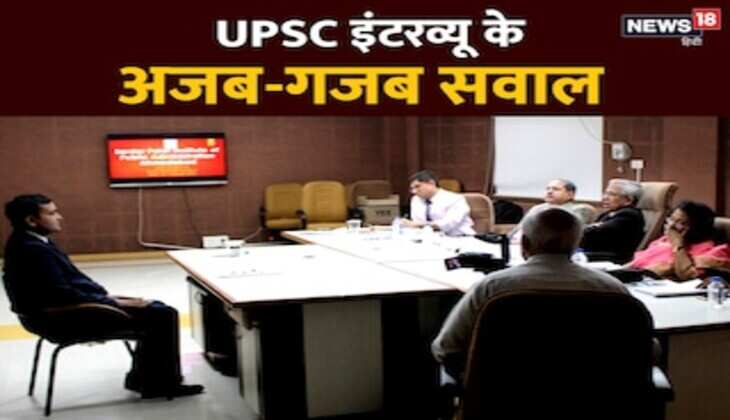
New Delhi — The Union Public Service Commission (UPSC) civil services interview is widely regarded as one of the most challenging in the country. Known for its demanding nature, the interview process can leave even the most prepared candidates stumped. Often, questions are designed to test not only the candidates’ knowledge but also their presence of mind and problem-solving abilities.
Here’s a glimpse into the type of tricky questions that candidates might encounter during a UPSC interview:
-
What is the difference between a forest and a jungle?
- Answer: A forest can be cultivated in a small area, while a jungle is natural and grows spontaneously.
-
Which part of the body never grows from childhood to old age?
- Answer: The eye.
-
What can you buy for 10 rupees that can fill an entire room?
- Answer: You can buy an incense stick or a candle for 10 rupees. The light and fragrance from it can fill the room.
-
What is something that is purchased for eating but is not eaten?
- Answer: A plate.
-
Why do we drink water?
- Answer: We drink water because we cannot eat or chew it.
-
Using only the number 2, how can you write 23?
- Answer: 22 + 2/2.
-
What is something made of gold that you won’t find at a goldsmith’s shop?
- Answer: A cot (charpoy). It is used for sleeping, and goldsmiths do not deal in it.
-
How can a person stay awake for 10 days?
- Answer: By sleeping during the night, thus staying awake only during the day.
-
What is the reverse of Nag Panchami?
- Answer: “Nag Do Not Punch Me.”
-
What do 2 and 3 represent when referred to as a company and a crowd respectively? What about 4 and 5?
- Answer: 4 and 5 always add up to 9.
These questions highlight the unconventional thinking that UPSC interviews often demand. Candidates must be prepared to navigate such queries with creativity and clarity. The ability to handle such tricky questions can make the difference in the highly competitive selection process for IAS, IPS, IFS, and IRS positions.