
Relevance of the Mentor–Pupil Relationship During the Ed-Tech Era
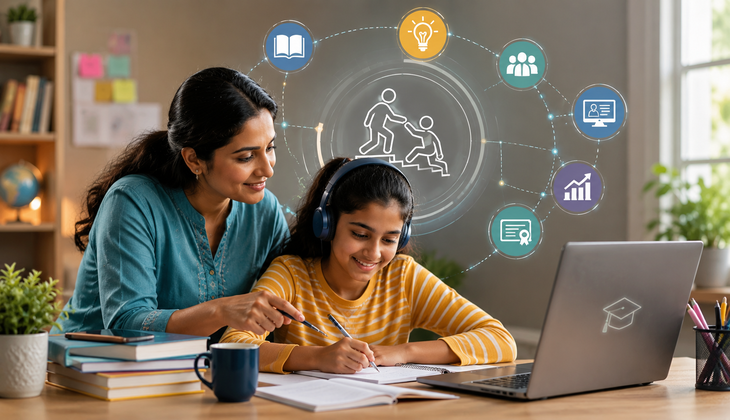
Mentorship has been the unseen force behind human progress throughout history. From Socrates and Plato to Jobs and Ive, great mentors helped create brilliant brains. For many decades, the bond between a mentor and a student has been seen as the bedrock of meaningful education. Long before smart classrooms and artificial intelligence were introduced, learning was founded on trust, dialogue, guidance, and personal connection. Today, education is undergoing one of its most significant revolutions. Online classrooms, AI-powered tutors, adaptive learning systems, and digital credentials have transformed how students gain knowledge.
Today's professionals deal with a paradox: they have unlimited access to information but little clarity about their direction. Anything can be found on the world of the web, but very few of us know what to do next.
The argument is no longer whether technology can teach; it undoubtedly can. The most important question is whether technology can mentor. The fast advancement of educational technology has made education more accessible than ever before. A student in a rural community can attend lectures by renowned academics, study coding from international professionals, or prepare for competitive exams using personalised AI-powered tools. Information is no longer in scarcity; it is abundant.
Despite this unprecedented access, many educators are detecting a widening gap—not in knowledge, but in connection.
In many circumstances, pupils know what they need to learn but don't comprehend why.
This is where mentorship becomes essential.
Mentors provide emotional reassurance and help students overcome self-doubt. Technology may offer instant answers, but it only teaches patience and understanding. While online platforms help kids learn and prepare for exams, mentors teach them life skills like confidence, communication, leadership, and resilience. These are qualities that algorithms, despite becoming increasingly sophisticated, cannot genuinely replicate.
Mentors are not expected to battle against technology; instead,d they are expected to complement it. They are using AI and digital platforms to identify students' needs more effectively and personalise education. Educators have a critical role in inspiring pupils to create their own intelligence. If students become accustomed to outsourcing their thinking to technology, their confidence in their own abilities and willingness to explore gradually diminish. The actual objective is to cultivate minds capable of asking questions and offering creative ideas. In the age of technology, the preservation of human intelligence must remain the highest priority
Thus, even in the age of educational technology, the mentor-pupil relationship remains relevant. If anything, it's become more valuable. As education evolves, success will be determined not only by the advancement of technology but also by how well we preserve the human element of learning. Mentorship adds purpose to education, but technology can expedite it.
In the end, screens may provide information, but mentors mould individuals.