
Modi Government's Latest Push for Lateral Entry Recruitment: A Detailed Examination
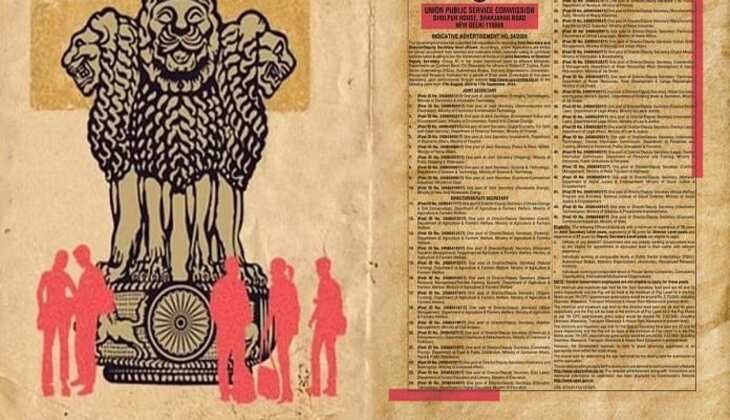
In a significant move to address the persistent shortage of IAS officers and enhance domain expertise within central government ministries, the Modi administration has unveiled its largest lateral entry recruitment drive to date. Announced on August 17, 2024, this latest initiative seeks to fill 45 high-level positions across 24 central ministries, marking the fifth such drive since the program's inception in 2018.
Expanding Lateral Entry Scheme
The recent advertisement by the Union Public Service Commission (UPSC) calls for applications to fill 10 positions at the joint secretary level and 35 positions at the deputy secretary and director levels. This recruitment drive is the most extensive since the scheme was first introduced, reflecting an urgent response to the acute shortage of IAS officers, which currently stands at over 1,000 positions below the required number.
The lateral entry scheme, initially recommended by the NITI Aayog and the Sectoral Group of Secretaries on Governance in 2017, aims to infuse specialized skills into the central government’s senior management ranks. According to a Department of Personnel and Training (DoPT) official, this initiative addresses two key issues: the lack of domain expertise and the severe deficit of IAS officers.
Criticism and Controversy
Despite the intent to address these gaps, the scheme has faced significant criticism, particularly regarding its lack of reservation for Scheduled Castes (SC), Scheduled Tribes (ST), and Other Backward Classes (OBC). The government’s decision not to apply reservation policies to lateral entry positions has sparked a heated debate. Congress President Mallikarjun Kharge and Rashtriya Janata Dal (RJD) leader Tejashwi Yadav have condemned the move, accusing the BJP of undermining constitutional reservation provisions. Yadav described the lack of reservation as a “dirty joke” on the Constitution, while Kharge criticized the scheme as a deliberate attempt to exclude marginalized communities from these positions.
The National Commission for Backward Classes (NCBC) also expressed concerns in 2021, questioning the legality and fairness of excluding reservations from lateral entries. The DoPT has defended its stance, citing that since these are single posts and the appointments are contractual, reservation policies do not apply. This position aligns with the 2018 DoPT guidelines which state that reservation is not applicable in such scenarios.
Additional Concerns
Beyond the reservation issue, there are other criticisms of the lateral entry scheme. Some IAS officers argue that the scheme is an inadequate solution to the broader issue of officer shortages. With a current deficit of over 1,000 IAS officers, critics question how the lateral entry scheme, which introduces a limited number of new recruits, can effectively address the systemic issue. Furthermore, there are concerns about the potential demoralizing effect on existing IAS officers, who may have to report to new recruits with less experience in governance, impacting overall morale and efficiency.
Looking Ahead
The government is also considering increasing the number of IAS officers through the civil services exam, but this process is expected to be gradual due to potential implications for career progression within the service.
In summary, while the Modi government's latest lateral entry recruitment drive aims to tackle pressing shortages and bring specialized expertise to central ministries, it faces significant criticism over the lack of reservation and broader questions about its effectiveness in resolving systemic issues within the IAS. As the scheme continues to evolve, it will be crucial to address these concerns and ensure that recruitment strategies align with both legal mandates and the needs of effective governance.