
Shyama Prasad Mukherjee: Understanding the Leader Behind BJP's Ideological Roots
Dr. Shyama Prasad Mukherjee has once again become a prominent figure in national political discussions. Political leaders across India paid tribute to him on his death anniversary, while in West Bengal his legacy continues to receive renewed attention through commemorative events and public recognition.
These developments come as the BJP increasingly highlights Mukherjee's contribution to Indian politics, particularly in West Bengal, where he was born and began his public life.
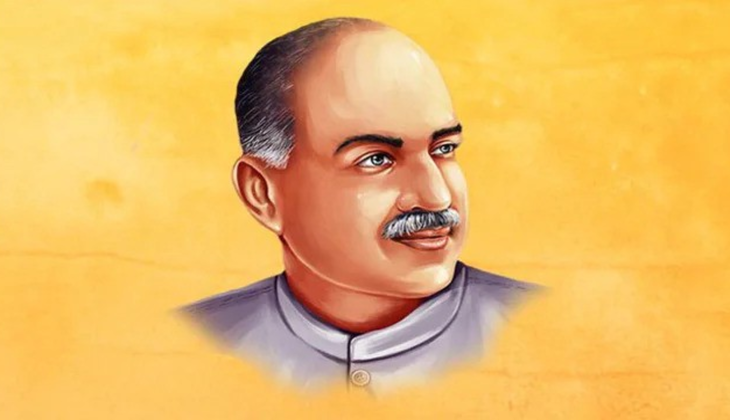
Who Was Shyama Prasad Mukherjee?
Born in Kolkata in 1901, Dr. Shyama Prasad Mukherjee was one of the most accomplished public intellectuals of his generation.
He became one of the youngest Vice-Chancellors of the University of Calcutta and established himself as an educationist before entering politics. Following India's independence, he served as the country's first Minister for Industry and Supply in Prime Minister Jawaharlal Nehru's cabinet.
In 1951, he founded the Bharatiya Jana Sangh, which later evolved into today's Bharatiya Janata Party (BJP).
His Ideological Contributions
Mukherjee advocated for national integration, constitutional unity and a strong central framework.
He is particularly remembered for opposing the separate constitutional arrangements that existed in Jammu and Kashmir under Article 370. His slogan emphasised the idea that one nation should function under one constitution, one flag and one head of government.
Although Article 370 remained in force for decades after his death, the BJP consistently regarded Mukherjee's position as a foundational ideological commitment.
Why Is He Important for BJP?
For the BJP, Mukherjee is more than a historical figure.
He represents the ideological origins of the party through the Bharatiya Jana Sangh. Many of the BJP's long-term positions on nationalism, governance and constitutional integration trace their roots to his political philosophy.
As a result, the party regularly commemorates his birth and death anniversaries while presenting his ideas as part of its historical narrative.
Why Does West Bengal Matter?
West Bengal occupies a unique place in Mukherjee's legacy.
Born and educated in Kolkata, he remains one of Bengal's most influential national political figures. The BJP has increasingly sought to highlight his Bengali identity while expanding its political presence in the state.
His legacy allows the party to connect regional pride with its national political ideology, making him an important symbolic figure in Bengal's contemporary political landscape.
What Can Today's Youth Learn?
Regardless of political beliefs, Mukherjee's life offers broader lessons.
His commitment to education demonstrates that intellectual achievement can become the foundation for public leadership. His willingness to stand firmly by his convictions illustrates the importance of principled politics, while his role in building political institutions shows that lasting influence often comes through creating organisations rather than pursuing individual recognition.
For young citizens, understanding historical leaders from different ideological backgrounds encourages informed participation in democracy and a deeper appreciation of India's political evolution.
Conclusion
More than seven decades after his death, Dr. Shyama Prasad Mukherjee continues to influence India's political discourse. His contributions to education, governance and political organisation ensure that his legacy remains relevant, particularly in West Bengal and within the BJP.
Whether viewed through the lens of history, ideology or democratic development, his life continues to shape conversations about India's past and its future.