
Indian Cricket Hits a New Low Against England: Why Has the Team Suddenly Lost Its Edge?
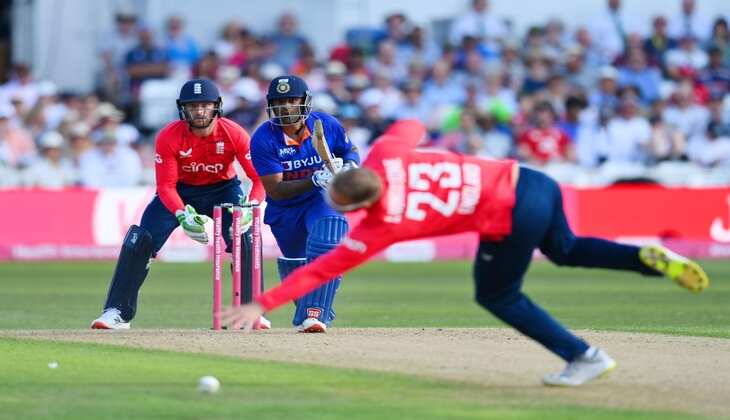
Indian cricket is searching for answers after one of the darkest nights in its T20 history. England crushed India by 125 runs in the third T20I at Trent Bridge, bowling the visitors out for just 76 while defending 201. The defeat, India's heaviest by runs in T20 Internationals, handed England a commanding 2-0 lead in the five-match series and exposed worrying flaws in a team that only months ago was celebrating global success.
The loss was more than a poor performance. It highlighted concerns over India's batting approach, leadership, team balance, and ability to perform in challenging overseas conditions. For a nation that expects its cricket team to compete for every trophy, the collapse has triggered an uncomfortable but necessary conversation.
A Batting Collapse That Shocked Everyone
India's chase of 202 never really began.
England's pace duo Jofra Archer and Josh Tongue produced a relentless opening spell, using swing, seam,m and extra bounce to rip through India's top order. Five wickets fell inside the Powerplay, ay and the visitors never recovered, eventually folding for just 76 in 11.4 overs. Tongue finished with four wickets while Archer claimed three and was named Player of the Match.
The batting collapse exposed a recurring weakness. Indian batters, who dominate on flatter pitches and in franchise cricket, struggled once the ball began moving. Rather than adjusting to conditions, several players continued playing attacking strokes, allowing England to dictate the contest from the very beginning.
Remembering the Greats
Indian cricket has overcome difficult overseas conditions before because previous generations mastered the art of adaptation.
Sachin Tendulkar built his legacy by succeeding against the world's fastest bowlers in Australia, England, and South Africa. Rahul Dravid, famously known as "The Wall," thrived through patience and flawless technique. VVS Laxman repeatedly rescued India from impossible situations, while Virender Sehwag combined fearless stroke play with remarkable game awareness.
More recently, Virat Kohli transformed himself into one of the finest overseas batters of his era through discipline and relentless preparation. Rohit Sharma, after years of inconsistency abroad, reinvented his technique and became a dependable opener across conditions.
The current generation undoubtedly possesses talent, but the England series has shown that raw aggression alone is not enough at the highest level.
Leadership Faces Its First Major Test
Captain Shreyas Iyer did not attempt to hide behind excuses after the defeat.
Calling India's performance "atrocious," Iyer admitted the team had failed in every department and accepted responsibility for the result. It was an honest assessment, but it also reflected the immense pressure that comes with leading the Indian cricket team.
Comparisons with former captains are inevitable.
MS Dhoni became renowned for remaining calm even in the most intense situations, often making bold tactical decisions that changed matches. Sourav Ganguly rebuilt Indian cricket by backing young players and creating a fearless mindset. Virat Kohli raised fitness standards and made India competitive overseas, while Rohit Sharma successfully balanced aggressive cricket with tactical flexibility.
Every captain experiences setbacks early in their tenure. The challenge for Iyer is to ensure this defeat becomes a learning experience rather than the beginning of a worrying trend.
A Team in Transition
Indian cricket is undergoing another generational shift.
The team has gradually moved away from relying on experienced stars like Virat Kohli, Rohit Sharma, Ravindra Jadeja, Ravichandran Ashwin, and Mohammed Shami, who carried the side through multiple ICC tournaments and overseas tours.
Replacing players of that stature is never easy.
Young cricketers have emerged through the IPL with immense confidence and skill, but international cricket demands much more than talent. It requires adaptability, temperament,t and consistency against the world's best bowlers in unfamiliar conditions.
Those qualities can only develop with experience.
IPL Success Does Not Guarantee International Success
The Indian Premier League remains one of cricket's greatest success stories, producing fearless batters capable of scoring quickly against elite bowling attacks.
However, the England tour has once again demonstrated that international cricket is a different challenge altogether.
English conditions reward bowlers who can swing the new ball and exploit seam movement. Batters must be willing to leave deliveries, rotate strike,ke and build partnerships before attacking.
Former Indian stars such as Yuvraj Singh, Gautam Gambhir, Suresh Raina, and Virender Sehwag all played attacking cricket, but they also knew when to absorb pressure and respect difficult conditions.
Finding that balance remains one of the biggest challenges for the current side.
Questions Over Team Selection
The team management is also facing criticism.
Frequent changes in the playing XI, uncertainty over batting positions, and constant experimentation have made it difficult for players to settle into clearly defined roles.
Successful Indian teams under coaches like Gary Kirsten and Rahul Dravid thrived because every player understood their responsibility within the squad.
Today's team is still searching for that stability.
England Deserves Full Credit
While India's shortcomings have dominated the headlines, England's performance deserves equal recognition.
Phil Salt's brilliant 70 laid the platform before Sam Curran's unbeaten 41 pushed England past the 200-run mark. Archer and Tongue then delivered one of England's finest new-ball spells in recent T20 history, backed by outstanding fielding and disciplined bowling throughout the innings.
England adapted perfectly to home conditions, executed their plans with precision, and completely outplayed India in every department.
Can India Bounce Back?
History suggests they can.
Indian cricket has recovered from difficult periods before.
After disappointing years overseas, Sourav Ganguly built a team that believed it could win anywhere. MS Dhoni delivered the inaugural T20 World Cup, the 2011 ODI World Cup, and the Champions Trophy. Virat Kohli turned India into one of the strongest touring Test sides in the world, while Rohit Sharma guided the team to major white-ball success.
Those achievements were built after setbacks, not before them.
The current squad still possesses enough talent to return stronger. However, improving against high-quality pace bowling, settling on a consistent playing X, and developing stronger leadership under pressure must become immediate priorities.
The defeat at Trent Bridge should not simply be remembered as India's worst T20 loss. It should serve as a wake-up call.
If Indian cricket learns the right lessons, this humiliation could become the foundation for its next successful era. If not, the gap between domestic dominance and international excellence may continue to grow.