
Indus Waters Treaty Can No Longer Function in Its Current Form, Says India
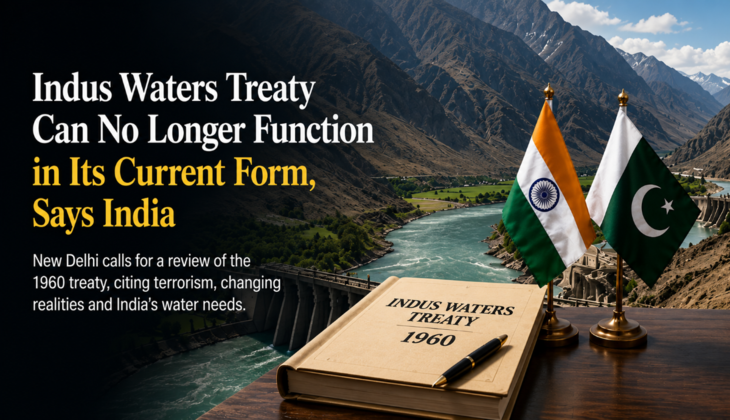
For more than six decades, the Indus Waters Treaty (IWT) stood as one of the few agreements that survived wars, diplomatic tensions and changing governments between India and Pakistan. Signed in 1960 with the World Bank as a mediator, the treaty governed the sharing of the waters of the Indus river system between the two neighbours.
Now, India has made it clear that the treaty, in its present form, can no longer continue.
The statement marks one of the strongest positions New Delhi has taken on the agreement and reflects the sharp decline in India Pakistan relations, particularly after repeated terror attacks that India says have been supported by Pakistan based groups.
Why India Wants Changes
The Indian government has argued that the treaty was negotiated under very different circumstances and no longer reflects present day realities. Officials believe the agreement places significant restrictions on India's ability to fully utilise the rivers allocated to it, especially as water demand continues to rise because of population growth, urbanisation and climate change.
India has also repeatedly pointed to Pakistan's continued objections to hydroelectric projects in Jammu and Kashmir, saying the dispute resolution process has often delayed legitimate development work.
According to New Delhi, the treaty needs to be revisited to address modern challenges and ensure a more balanced framework.
Terrorism Changes the Equation
Another major reason behind India's stand is cross border terrorism.
Following recent terror incidents, India has argued that agreements based on mutual trust cannot function effectively when one side continues to support activities that threaten peace and security. Officials have maintained that normal bilateral arrangements become difficult to sustain in an atmosphere where terrorism remains a persistent concern.
India has repeatedly conveyed that terrorism and cooperation cannot go hand in hand.
Pakistan Rejects India's Position
Pakistan has strongly opposed India's remarks, insisting that the Indus Waters Treaty remains an internationally recognised agreement that cannot be changed unilaterally.
Islamabad has urged the international community to safeguard the treaty and has continued to seek dispute resolution through the mechanisms provided under the agreement. Pakistani officials have maintained that the treaty has successfully survived previous conflicts and should continue to serve as the framework for water sharing.
The differing positions have further widened the diplomatic divide between the two countries.
A Treaty That Shaped South Asia
The Indus Waters Treaty divided six rivers between the two nations. India received rights over the eastern rivers, Ravi, Beas and Sutlej, while Pakistan received most of the waters from the western rivers, Indus, Jhelum and Chenab. Although India can use the western rivers for limited purposes such as irrigation and hydropower, the treaty imposes strict conditions on storage and diversion.
For decades, the agreement has been regarded internationally as one of the world's most successful water sharing treaties.
However, changing geopolitical realities, increasing water stress and climate uncertainty have raised fresh questions about whether an agreement signed over sixty years ago can continue to meet present day needs.
What Happens Next?
India has not indicated that it intends to abandon international commitments overnight. Instead, it has stressed that the treaty requires a comprehensive review to reflect current realities.
Any changes would likely involve prolonged diplomatic engagement and could attract international attention, given the treaty's significance in South Asia's water security.
For now, both countries remain firmly opposed to each other's positions, making an immediate resolution unlikely.
Looking Ahead
Water has always been one of the most sensitive issues between India and Pakistan. As climate pressures increase and political relations remain strained, the future of the Indus Waters Treaty is entering uncertain territory.
Whether the agreement is revised, renegotiated or continues in its present form will depend not only on legal and diplomatic processes but also on the broader relationship between the two neighbours. What is clear is that New Delhi believes the status quo is no longer sustainable, opening a new chapter in one of the world's most significant transboundary water agreements.