
Israel Launches Mass Airstrike in Syria: Escalation on Border Amid Inclusion of Buffer Zone
Israel has ramped up military operations in Syria, launching over 350 airstrikes in 48 hours targeting key military sites and advancing into a contentious buffer zone, leading to growing regional tensions.
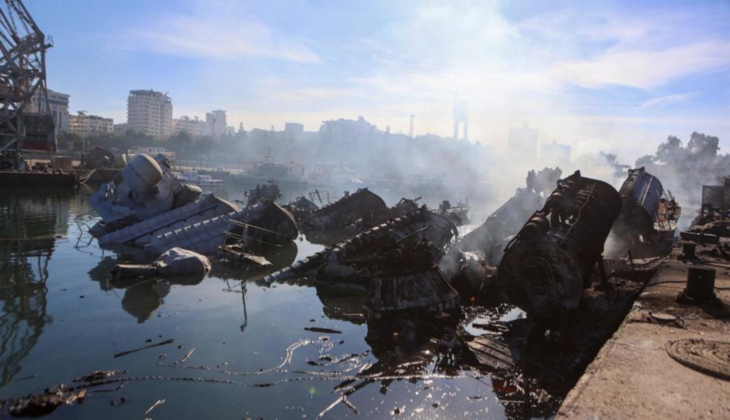
Israel has increased its bombardments on Syria, as over 350 airstrikes occurred within the past 48 hours. Confirmed both by Syrian Observatory for Human Rights and Israeli officials, these have mostly hit strategic weapon warehouses, military airfields, missile storages, and defense systems within Damascus and throughout Syrian cities. The activities of Israel's military surface amid a Syrian government breakdown in President Bashar al-Assad's rule and the emergent powers of rebel forces.
It means to prevent weapons from going to extremists' arms. As the Israeli Defense Minister stated, Israel Katz, "the strikes have neutralized key strategic weapon stockpiles, significantly undermining Syria's military capabilities." Moreover, Israel's naval forces targeted two Syrian naval facilities. The attack destroyed several ships, including Soviet-era missile ships. Israel Katz reminded that Israel would continue the process of securing the region by preventing extremist groups targeting Israel.
It has also entered a 400-square-kilometer buffer zone established after the 1973 Middle East War, which borders Syria. The Israeli officials argue that this is a defensive incursion meant to prevent attacks on its citizens. However, with this zone only 40 kilometers from Damascus, this has sparked fears of further escalation. Despite these fears, Lt. Col. Nadav Shoshani, a spokesman of the army, has denied reports of an Israeli push toward the Syrian capital.
All of these have brought international condemnations against the increased Israeli activity. Some neighbors have pointed out that Israel took this time when Syria is unstable to make full use of it. Thereby, Israel broke many international laws and continued making further destabilization in the area. Turkish, which has good friendship with the Syrian opposition fighters, labeled the activity by the Israeli as "occupation." The United Nations issued their statement by calling for Israeli and Syrian compliance with the disengagement agreed in 1974 fearing more deterioration in the region.
As Syria struggles to deal with the aftermath of the fall of Assad, the country remains in a state of political disarray. The rebel group Hayat Tahrir al-Sham (HTS) now controls major parts of Syria, leaving many to be uncertain about the future of that country. Israel has signaled interest in engaging with the newly established Syrian government but also seeks to address extremist dangers and stabilize the region.
Also read: Bengaluru, Chennai to Expect Heavy Rain: IMD Issued Yellow Alerts as Widespread Showers on Course
