
Trump Warns Iran Again Here's What Washington Actually Wants Before Any Peace Deal
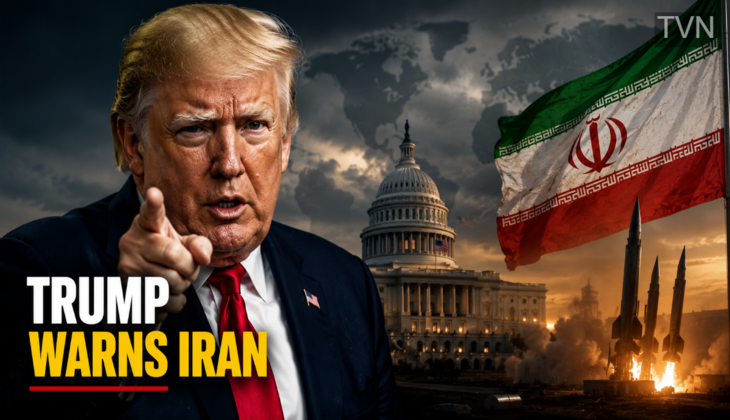
The on-again, off-again standoff between Washington and Tehran has taken yet another turn this month, and once again, it's Donald Trump doing the talking loudly. After a brief window of cautious optimism following talks in Switzerland back in June, things have gone sideways fast. Strikes resumed, ships got hit in the Strait of Hormuz, and the ceasefire that everyone was cautiously celebrating just weeks ago is now, in Trump's own words, "over."
So where does that leave the idea of a lasting peace deal? And more importantly what does the US actually want from Iran before it's willing to call this whole thing settled?
A Ceasefire That Didn't Last
Things looked genuinely promising in late June. A memorandum of understanding had been signed, and there was real talk of the Strait of Hormuz reopening under a ceasefire framework. Trump himself said an agreement was close to being finalized, and reports suggested the deal would include a temporary freeze on Iranian uranium enrichment, some movement on sanctions relief, and a phased reopening of trade routes through the Gulf.
It didn't hold. Early this month, Iran struck several vessels moving through the Strait of Hormuz, and the US hit back hard. Trump declared the ceasefire dead and warned that American retaliation would "get much worse" if Iranian forces kept targeting ships in the strait. Explosions were reported at multiple Iranian port cities, including Bushehr, Bandar Abbas, and Sirik, while Iran's Revolutionary Guards claimed they'd hit back at US bases in Kuwait and Bahrain.
Trump's response, in his own colorful style: "Every time they hit us, we hit them 20." He's since said he's not even sure the two countries are headed back toward all-out war, but he also isn't ruling it out.
Trump's Bottom Line: What Does the US Actually Want?
Strip away the social media posts and the tough talk, and a fairly consistent set of US demands has emerged over the past several months of this on-off negotiation.
Give up the enriched uranium. As of mid-May, one of the core preconditions Trump laid out was that Iran hand over roughly 400 kilograms of enriched uranium to the United States. This has been treated as non-negotiable from the American side a way of physically limiting how close Iran could get to weapons-grade material even if talks stall again.
Accept real, ongoing nuclear inspections. After the Switzerland talks concluded, Trump was blunt that Iran needed to commit to long-term "nuclear honesty," which in practice means allowing International Atomic Energy Agency inspectors back into the country for major weapons inspections. Vice President JD Vance called this one of the clearest wins to come out of that round of talks, framing it as essential to making sure Tehran can't quietly develop a weapon down the line.
No unlimited enrichment infrastructure. The US position has allowed for the possibility of Iran keeping one operational nuclear facility, but nothing beyond that a sharp reduction from where Iran's program stood before the conflict escalated.
A halt to hostilities as a prerequisite, not an afterthought. Washington has repeatedly tied any resumption of negotiations directly to a stop in Iranian attacks, refusing to treat talks and military restraint as separate tracks.
No reparations, and no quick unfreezing of assets. The US has also pushed back hard on two of Iran's own asks demands for reparations tied to the conflict, and a call to release a significant share of Iran's frozen assets. Washington's position has been to reject both, at least for now.
At various points, Trump has gone even further, publicly demanding what he called Iran's "unconditional surrender," a phrase that predictably didn't go over well in Tehran and drew a sharp rebuke from Iranian leadership.
Where Things Stand Now
As of this week, Iran has pushed back on Trump's suggestion that talks could simply continue without a ceasefire in place first. Tehran's position is that Washington needs to address the Strait of Hormuz situation and normalize Iran's oil exports before any real progress can be made.
Trump, for his part, hasn't backed off the pressure. He recently threatened to respond with what he described as "1,000 missiles" if Iran acted on threats against his life, referencing intelligence about an alleged assassination plot reportedly flagged by Israel.
Despite the harsh rhetoric, Trump maintains he'd still rather see this resolved diplomatically than through further military action he's said as much multiple times even while ordering strikes. Whether that's enough to get both sides back to the table, especially with trust this thin on both ends, is still very much up in the air.
For now, the closest thing to an actual roadmap remains the 60-day framework that came out of the Lake Lucerne talks in Switzerland inspections, a nuclear cap, and a broader regional ceasefire. Whether it survives the current round of strikes is the question everyone in the region is watching closely.