
Relief for India, China as US Lowers Russian Oil Tariff Threat From 500% to 100%
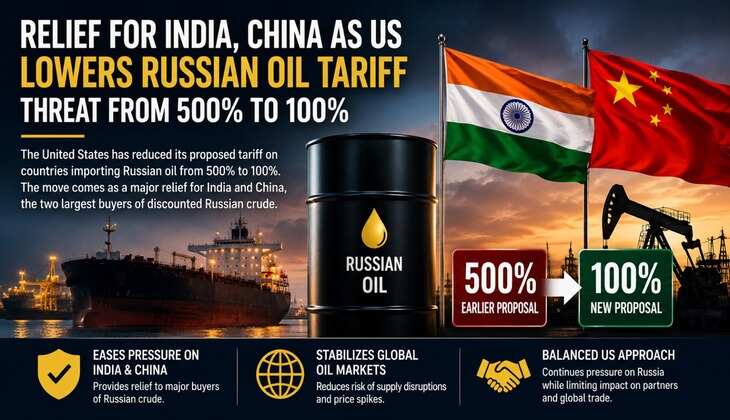
In a significant policy shift that could ease concerns across global energy markets, the United States has reduced its proposed tariff on countries importing Russian oil from an initially discussed 500% to 100%. The move comes as a major relief for India and China, the two largest buyers of discounted Russian crude since the Ukraine conflict reshaped global energy trade.
The earlier proposal had raised fears of severe economic consequences. A 500% tariff would have dramatically increased pressure on countries continuing to purchase Russian oil and could have disrupted international trade, strained diplomatic ties, and triggered fresh volatility in global crude prices. By lowering the proposed tariff to 100%, Washington appears to be pursuing a more balanced approach that continues to pressure Moscow while limiting the risk of collateral damage to its strategic partners.
India has emerged as one of the biggest importers of Russian crude over the past few years. The availability of discounted oil has helped Indian refiners reduce import costs and shield consumers from the full impact of fluctuating global oil prices. New Delhi has repeatedly defended its purchases, arguing that India's energy security and economic interests remain its top priority. The government has also maintained that these imports do not violate any United Nations sanctions against Russia.
China, which has also significantly increased its purchases of Russian oil, stands to benefit from the revised proposal. A lower tariff reduces immediate concerns for Chinese refiners and exporters while allowing Beijing greater flexibility in managing its energy requirements amid an uncertain global economic environment.
The decision also offers reassurance to international oil markets. Energy analysts had warned that a 500% tariff could have disrupted global supply chains, tightened crude availability, and pushed oil prices significantly higher. The reduced proposal is expected to lessen those fears, although markets will continue to watch future developments closely.
The revised tariff proposal reflects the complex challenge facing the United States. Washington is seeking to reduce Russia's energy revenues without creating major economic disruptions for allied nations or destabilising global markets. A 100% tariff remains a strong policy signal, but it is viewed as a more practical measure than the previously discussed 500% levy.
For India, the development provides temporary relief but not complete certainty. Businesses, refiners, and policymakers will continue monitoring the progress of the proposal, as its final impact will depend on how the legislation is framed and implemented. Any future restrictions on Russian oil trade could still influence India's energy imports and export competitiveness.
The reduction in the proposed tariff marks an important shift in US policy. While the pressure on Russia remains, the softer stance acknowledges the realities of global energy dependence and the economic interests of major partners such as India and China. As geopolitical tensions continue to shape international trade, the latest move offers breathing room to energy-importing nations while keeping diplomatic negotiations firmly in focus.